Tankless Water Softeners: Space-Saving for Small Homes
Are you tired of bulky water softening systems taking up valuable space in your small home? You’re not alone. Many homeowners face the challenge of finding a compact solution that doesn’t compromise on performance.
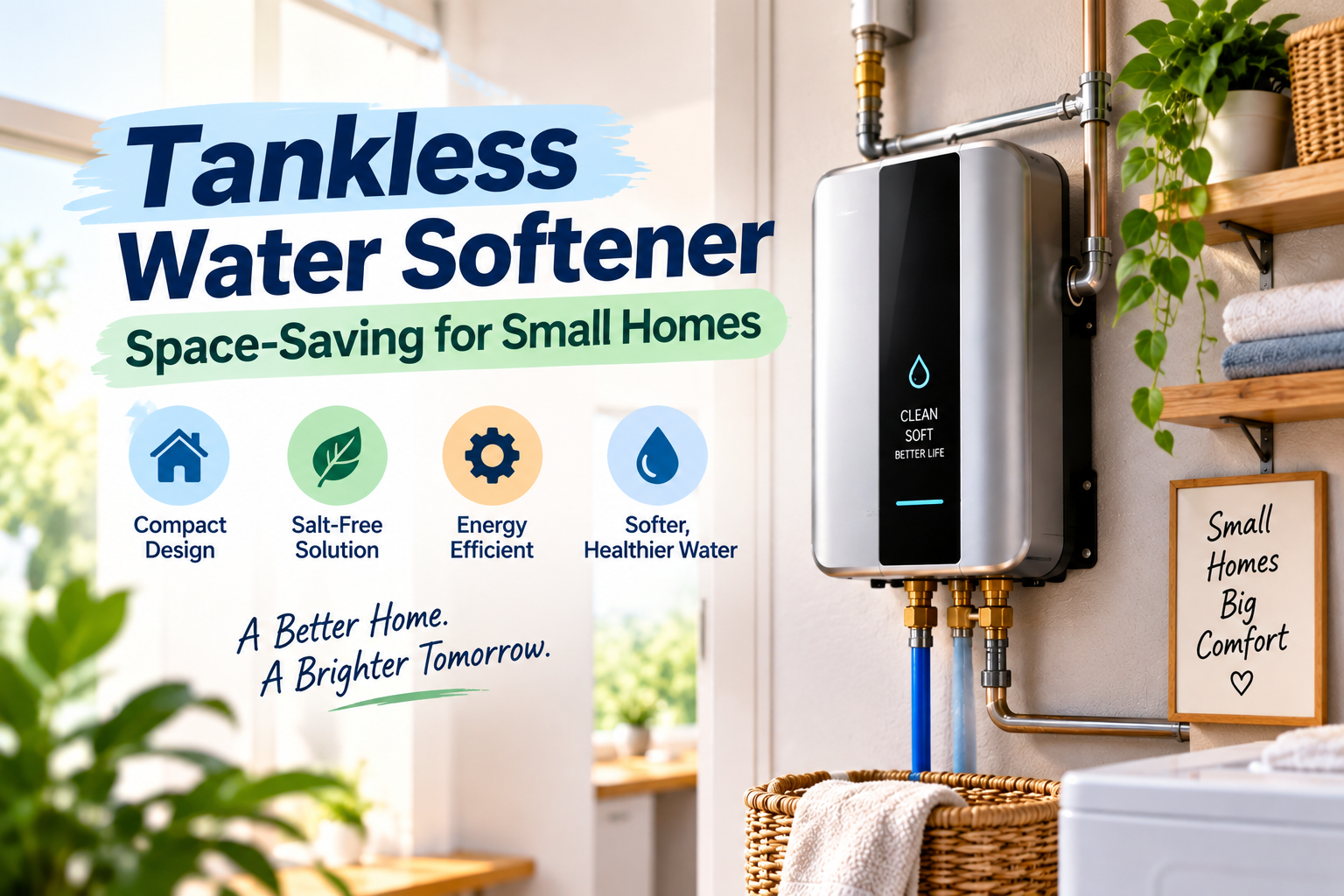
Tankless water softeners are designed to be space-saving. They are perfect for condos, townhomes, and apartments. Recent data shows they are ideal for homes with limited space. They provide a reliable and efficient solution for softening water.

By choosing a tankless water softener, you can enjoy softened water without losing space. This innovative solution is great for homeowners looking for a compact and efficient way to improve their water quality.
Key Takeaways
- Compact design ideal for small homes
- Space-saving solution for condos and apartments
- Efficient and reliable performance
- Perfect for homeowners with limited space
- Improves water quality without sacrificing space
Understanding Tankless Water Softeners
Tankless water softeners are changing how we treat water in small homes. They offer all the good things of traditional softeners but don’t need a big tank.
What Makes a Water Softener “Tankless”?
Tankless water softeners use Template Assisted Crystallization (TAC) and electromagnetic descaling. They soften water without salt or big tanks. This saves space and cuts down on upkeep.
Core Technology and Components
The heart of tankless water softeners is specialized components. They change the water’s minerals to stop scale buildup. These parts are small and strong, lasting a long time.
Size and Footprint Specifications
Tankless water softeners are small, fitting in tight spots. Some are as tiny as 12 inches by 6 inches. They’re perfect for small spaces.
How Tankless Systems Differ from Traditional Softeners
Tankless systems don’t use salt like old softeners do. They have other ways to soften water. The main differences are:
- Salt-free operation, which is better for the planet and saves on upkeep.
- Energy efficiency, needing less power than salt-based systems.
- Compact design, fitting in many places.
These features make tankless water softeners great for those wanting easy, green water softening.
The Space-Saving Advantage for Small Homes
Tankless water softeners are changing how small homes handle water treatment. They offer a compact solution that works well without taking up a lot of space. These systems soften water without needing big tanks, perfect for homes with little room.
Compact Design Features
Tankless water softeners are known for their small size. They don’t need big tanks like old models do. This makes them great for places where space is tight.

Installation Locations for Limited Spaces
In small homes, every inch matters. Tankless water softeners can be put in different spots to save space. Here are two common places:
Under-Sink Options
Putting them under sinks is smart. It uses dead space and keeps the softener hidden. This is perfect for kitchens and bathrooms where space is scarce.
Wall-Mounted Solutions
Wall-mounted tankless water softeners are also good for small homes. They hang on walls, freeing up floor and counter space. This makes the most of vertical space.
Space Efficiency Measurements and Comparisons
To show how much space they save, let’s look at the size of traditional and tankless water softeners:
| Water Softener Type | Typical Dimensions (inches) | Footprint (sq. ft.) |
|---|---|---|
| Traditional | 48″H x 24″W x 18″D | 4 |
| Tankless | 12″H x 6″W x 6″D | 0.25 |
The table shows tankless water softeners take up much less space. This makes them a great choice for compact home softener needs.
Salt-Free Softening Technology Explained
Homeowners looking for green alternatives to traditional water softeners have found hope in salt-free softening. These systems condition water without taking out good minerals. This makes them a healthier and greener choice for homes.
There are many salt-free softening methods, each with its own perks. One method is Template Assisted Crystallization (TAC). It changes the way minerals in water act, stopping them from sticking together and causing problems.
Template Assisted Crystallization (TAC)
TAC uses a special template to help minerals form into a safe, non-sticky powder. This powder can be easily washed away. It cuts down on scaling in pipes and appliances, making them last longer and work better.

Electromagnetic and Electronic Descaling
Electromagnetic and electronic descaling systems change minerals in water with electromagnetic fields. This stops scale from forming. They are simple to set up and keep running, offering a chemical-free way to soften water.
Carbon Filtration and Chelation Methods
Carbon filtration and chelation are other ways to soften water without salt. Activated carbon filters clean out bad stuff and make water taste better. Chelation grabs onto minerals, stopping them from causing scaling issues.
In short, salt-free softening tech like TAC, electromagnetic descaling, and carbon filtration are good and green ways to soften water. Knowing about these options helps homeowners choose the best for their needs.
Benefits of Tankless Water Softeners Beyond Space-Saving
Tankless water softeners offer more than just saving space. They bring many benefits that make them a great choice for homeowners. These advantages make upgrading your water treatment a smart move.

Energy Efficiency Advantages
Tankless water softeners are energy-efficient. They use much less power than traditional softeners. This is because they only work when needed, not all the time.
So, you get softened water without using a lot of energy. This helps you save on your electricity bill.
Environmental Impact and Eco-Friendly Features
Tankless water softeners are also eco-friendly. They use salt-free technology, which means no salt refills. This cuts down on waste and is good for the planet.
Reduced Maintenance Requirements
Tankless water softeners need very little maintenance. They have fewer parts and no tank to clean. This makes them easier to care for than traditional softeners.
No Salt Refills
Choosing a salt-free tankless water softener means no salt refills. This saves you money and effort over time.
Minimal Cleaning Needs
These systems are designed to be easy to clean. Without a tank, there’s no risk of sediment or bacteria. This makes them a healthier choice for your home.
Whole House Tankless Water Softener Systems
Homeowners looking for a complete solution might find whole house tankless water softeners appealing. These systems provide soft water for the whole house. They’re perfect for homes with many bathrooms and high water needs.
These systems are built to be efficient and effective. They make sure every faucet and appliance gets soft water. This improves the water quality for drinking, cooking, and cleaning.
Flow Rate Requirements for Full Home Coverage
Choosing the right whole house tankless water softener starts with the flow rate. The flow rate needed depends on the home’s size, number of bathrooms, and peak water use. A good flow rate ensures soft water is always available, even when demand is high.
A home with many bathrooms might need a system that can handle at least 10 gallons per minute (GPM). This ensures soft water is available everywhere, even during busy times.
Compact Solutions for Multi-Bathroom Homes
Multi-bathroom homes face unique challenges with water softening. Compact tankless water softeners are made for small spaces but still offer enough softening power. They’re great for homes where space is tight but soft water is needed.
Some models use advanced tech to be more compact without losing performance. This makes it possible to install a whole house tankless water softener even in tight spaces.
| Model | Flow Rate (GPM) | Compact Design |
|---|---|---|
| Model A | 8 | Yes |
| Model B | 12 | Yes |
| Model C | 10 | No |
Integration with Existing Plumbing in Small Spaces
Adding a whole house tankless water softener to small homes can be tricky. But, many modern systems are made to be flexible. They’re easier to install in different settings.
It’s key to check the existing plumbing to find the best installation method. Sometimes, it’s wise to get a professional’s help to ensure everything works right.
By picking a whole house tankless water softener made for small spaces and high flow rates, homeowners can enjoy soft water everywhere. They don’t have to give up valuable space.
Installation and Maintenance of Compact Home Softeners
Compact home softeners need careful installation and upkeep for best results. They save space and work well in small homes. But, they must be installed and maintained right to work well.
DIY vs. Professional Installation
Homeowners can choose to install a compact home softener themselves or get a pro. The choice depends on the system’s complexity and the homeowner’s skills.
Tools and Skills Required
For DIY, you’ll need basic plumbing tools and know your home’s plumbing. You’ll need to solder pipes, understand water flow, and size the system right.
When to Call a Professional
If your plumbing is complex or you’re unsure, get a pro. They know how to install it right and efficiently.
Maintenance Schedule and Requirements
Regular upkeep is key for your softener’s life and performance. This includes checking salt, cleaning, and making sure connections are tight.
| Maintenance Task | Frequency |
|---|---|
| Check Salt Levels | Monthly |
| Clean System | Every 6 Months |
| Inspect Connections | Annually |
Troubleshooting Common Issues
Even with regular care, problems can pop up. Issues like low water flow, salt bridging, or system failures are common. Fixing these quickly can stop bigger problems.
Comparing Tankless vs. Traditional Water Softening Systems
Tankless water softeners are becoming a popular choice. They offer benefits that traditional systems don’t. It’s important to know the differences between them.
Cost Analysis: Initial Investment and Long-Term Expenses
Cost is a big factor for homeowners. Tankless water softeners cost more at first. But, they save money in the long run because they use less energy and need less maintenance.
Studies show homeowners can save up to 30% on water heating bills with tankless systems. Energy-efficient water softeners like tankless models save energy and are better for the environment.
“The long-term benefits of tankless water softeners, including energy savings and reduced maintenance, make them an attractive option for homeowners.”
Traditional systems might be cheaper at first. But, they cost more over time. Tankless systems are more expensive at the start but save money in the long run.
Performance Differences in Real-World Settings
Tankless water softeners often work better than traditional systems. They provide soft water continuously without a storage tank. This is great for homes that use a lot of water.
Salt-free softening technology in tankless systems is also a plus. It reduces the environmental impact of salt disposal.
Research shows tankless systems work well even in very hard water. They stay efficient over time.
Which Homes Benefit Most from Tankless Systems
Tankless water softeners are perfect for small spaces. They’re compact and can be installed easily. They’re also good for homes that want to save energy and reduce their environmental impact.
They’re great for homes with high water needs or scaling problems. In summary, tankless systems offer cost savings, better performance, and environmental benefits. Homeowners should think about their needs before choosing.
Choosing the Right Tankless Water Softener for Your Small Home
Tankless water softeners are great for small homes because they save space. But, picking the right one needs careful thought. Homeowners must think about their needs and what they prefer.
Assessing Your Water Hardness Needs
First, figure out how hard your water is. This is measured in grains per gallon (gpg) or parts per million (ppm). You can test your water or ask a pro to find out.
Key Features to Consider for Space-Constrained Environments
When picking a tankless water softener for a small home, look for these features: compact design, low maintenance, and eco-friendly. Choose systems that are small and easy to install.
Top Brands and Models for Different Budgets
There are many tankless water softeners out there, for every budget. Here are some top picks:
Budget-Friendly Options
For those watching their budget, the WaterBoss 900 or NuvoH2O are good choices. They soften water well without costing too much.
Mid-Range Solutions
The SpringWell Whole House Water Softener is a good middle ground. It balances price and quality, perfect for small homes.
Premium Systems
If you’re ready to spend more, the WaterChef U9000 is worth it. It has advanced features and works really well.
| Brand/Model | Price Range | Key Features |
|---|---|---|
| WaterBoss 900 | $500-$800 | Compact design, easy installation |
| SpringWell Whole House | $1,000-$1,500 | High-performance, low maintenance |
| WaterChef U9000 | $2,000-$3,000 | Advanced features, superior performance |
Conclusion: Is a Tankless Water Softener Right for Your Small Home?
Tankless water softeners are great for small homes. They save space and work well in tight areas. These systems are an efficient home softener choice without losing quality.
They also use less energy and need less upkeep. This makes them a good pick for those who want to save money and help the planet.
Before getting a tankless water softener, check your water hardness and where you can put it. This helps decide if it’s the best choice for your home. It ensures you get a reliable and efficient way to soften your water.
In the end, a tankless water softener is a smart choice for small homes. It’s a compact, efficient, and easy-to-care-for option compared to old water softening systems.