
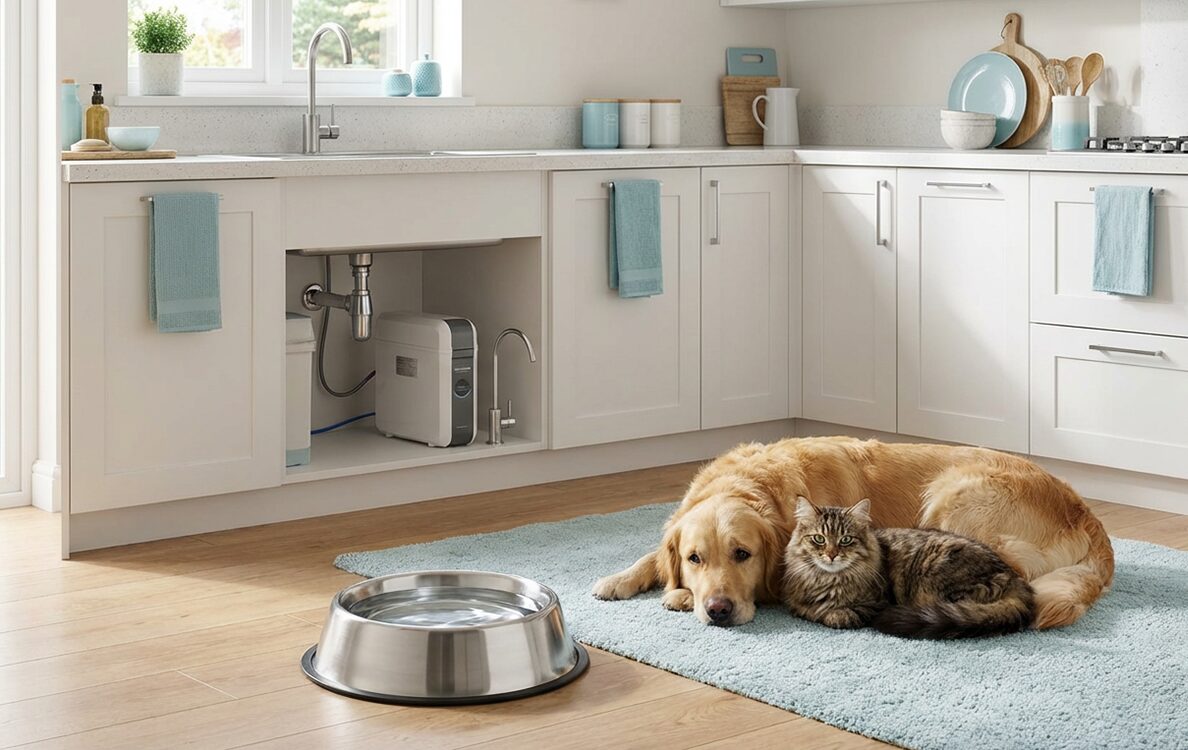
Pet-Safe Water Filters: Remove Toxins for Dogs and Cats
Water filters for pets should be chosen using the household water report and verified contaminant-reduction claims, not a general label such as “pet-safe.” Municipal standards are designed for people, and veterinary advice matters for animals with specific health needs. Compare certified performance and maintenance requirements, and do not treat a filter as a substitute for veterinary guidance.

Tap water can have toxins like chlorine, lead, and PFAS. These can hurt your pets’ health. The EPA sets standards for safe drinking water. But, even these levels might not be safe for our pets.
Vets say using water filters that remove toxins is key. This ensures cleaner, healthier water for your dogs and cats.
For advice on the best water filters for your pets, email info@pureh2ohome.com.
Key Takeaways
- Tap water can contain harmful toxins like chlorine, lead, and PFAS.
- The EPA sets standards for safe drinking water, but these may not be safe for pets.
- Veterinarians recommend using pet-safe water filters.
- Pet-safe water filters can remove toxins and provide cleaner drinking water.
- Contact info@pureh2ohome.com for personalized filter recommendations.
Understanding Water Quality Concerns for Pets
As pet owners, it’s important to know how our furry friends drink water. Dogs and cats drink differently than humans. This can lead to them getting exposed to water contaminants.
How Pets Consume Water Differently Than Humans
Pets drink water in many ways, often from the tap or a dirty bowl. Unlike us, they drink tap water more often. Dogs lap water quickly, which means they might swallow more contaminants. Cats might be pickier about their water, but they can still avoid clean water.
Why Pets May Be More Sensitive to Water Contaminants
Pets are more sensitive to water contaminants because of their size and physiology. They metabolize toxins faster, but this makes them more vulnerable. Chlorine and chloramines in tap water are harmful to pets. Pets with health issues or certain breeds are at higher risk.
It’s key for pet owners to ensure their pets have clean drinking water. Using pet safe water filters for toxins removal can help. When picking a filter, choose one that removes many contaminants and meets standards.
Common Water Toxins That Affect Dogs and Cats
The water your pets drink can have harmful substances. It’s important to know about the toxins that can harm them.
Chlorine and Chloramines
Tap water often has chlorine or chloramines to kill germs. But, these can harm pets. Chlorine can irritate eyes, skin, and lungs. Chloramines might even cause cancer, some studies say.
“Chlorine and chloramines in water are common,” experts say. “But pet owners should know the risks.”
Heavy Metals: Lead, Mercury, and Arsenic
Heavy metals like lead, mercury, and arsenic can get into water. They can cause serious health problems in pets. This includes brain damage, kidney disease, and cancer.
Lead can harm young pets’ development. Mercury is very toxic to the nervous system. Arsenic increases cancer risk in pets.
PFAS (Per- and Polyfluoroalkyl Substances)
PFAS are chemicals in non-stick cookware and firefighting foam. They can pollute water and harm pets. They are linked to cancer and reproductive issues.
PFAS stay in the environment for a long time. This makes them a big worry for pet owners.
Pesticides and Agricultural Runoff
Pesticides and runoff from farms can also pollute water. These can cause many health problems. This includes stomach issues and brain damage.
Pet owners should watch out for these chemicals in their water. They should take steps to remove them.
Health Impacts of Contaminated Water on Pets
Contaminated water can harm pets, affecting their health and life span. Pets need clean water to stay healthy. Dirty water can cause many health problems.
Short-term Effects of Toxin Exposure
Pets drinking contaminated water may get sick quickly. They might vomit or have diarrhea. These symptoms can make pets dehydrated if not treated fast.
Contaminated water can also carry harmful bacteria and viruses. For example, Leptospirosis can cause fever, tiredness, and kidney damage in pets.
Long-term Health Consequences
Long-term exposure to contaminated water can be very harmful. Drinking water with heavy metals like lead can damage kidneys and cause neurological problems.
Exposure to PFAS can lead to cancer, thyroid issues, and reproductive problems in pets. The long-term effects of contaminated water are serious. It’s crucial for pets to have clean water to drink.
Using a pet-safe water filter can significantly reduce the risk of these health issues.
Breeds and Species Most Vulnerable to Water Contaminants
Some pets are more at risk from water contaminants. Senior pets or those with health problems are more vulnerable. Their size, age, or health can make them more susceptible.
Certain breeds, like those with weak immune systems, are also at higher risk. Pet owners should know this and provide clean water. They can buy pet-safe water filters or compare pet-safe water filters to find the best one.
EPA and Veterinary Standards for Pet-Safe Water
The health of our pets depends a lot on the water they drink. It’s important to look at the standards for pet-safe water. The Environmental Protection Agency (EPA) sets rules for human drinking water, but these might not fit pets’ needs.

Current EPA Guidelines for Safe Drinking Water
The EPA sets rules for over 150 contaminants in drinking water. These include bacteria, viruses, and chemicals. These rules are to keep humans safe, but pets might react differently to some contaminants.
For example, the EPA says drinking water can have up to 4 milligrams per liter of chlorine. But, some studies say even less chlorine can harm pets. It might cause stomach problems or make skin issues worse.
Veterinary Recommendations for Pet Hydration
Vets say pets should drink clean water. They suggest using filtered water to lower toxin risk. Some vets say water should meet human standards but be better for pets.
Veterinary recommendations typically include:
- Using filtered water to minimize contaminants
- Avoiding water with high levels of chlorine or chloramines
- Regularly testing water quality, for pets with health issues
Gaps Between Human and Pet Water Safety Standards
There’s a big gap between human and pet water safety standards. Pets are more at risk because they are smaller and metabolize differently than humans.
For instance, PFAS (Per- and Polyfluoroalkyl Substances) need stricter limits for pets. Heavy metals like lead and mercury also have bigger health risks for pets, so they need lower limits.
It’s key for pet owners to know these differences. By understanding these gaps and using pet-safe water filters, owners can make their pets’ water safer. This can greatly improve their pets’ health and happiness.
How Pet-Safe Water Filters Remove Toxins from Drinking Water
Pet-safe water filters are made to keep drinking water clean for dogs and cats. They use different technologies to get rid of harmful stuff. This makes sure the water is safe for pets to drink.
Filtration Technologies Explained
Pet-safe water filters use several ways to clean water. Activated carbon helps get rid of chlorine, lead, and VOCs. Reverse osmosis is great at removing dissolved solids and heavy metals. Some filters also use UV treatment to kill germs and viruses.
Effectiveness Against Different Contaminants
How well a pet-safe water filter works depends on its technology. For example, activated carbon is good against chlorine and VOCs. But, reverse osmosis can tackle a wider range of bad stuff, like heavy metals. It’s important to pick a filter that matches the contaminants in your water.
- Activated carbon: Effective against chlorine, lead, and VOCs
- Reverse osmosis: Removes dissolved solids, heavy metals, and other impurities
- UV treatment: Kills bacteria, viruses, and other microorganisms
Certification Standards to Look For
When picking a pet-safe water filter, check for certifications. Look for ones from NSF International or the Water Quality Association. These show the filter meets high standards for cleaning water. Important certifications include NSF 401, NSF 42, and NSF 53.
Types of Pet-Safe Water Filtration Systems
The market has many pet-safe water filtration systems. Each has its own features and benefits. It’s important for pet owners to know these differences to choose the best for their pets.
Countertop Filters
Countertop filters are easy to install and maintain. They sit on the kitchen counter and filter water as it’s poured. They are affordable and can be moved around.
The Brita Longlast Filter removes up to 99% of chlorine and lead. This makes water safer for pets. But, these filters need regular replacements, which can cost more over time.
Under-Sink Systems
Under-sink systems are installed under the kitchen sink. They are connected to the water supply. They offer a more permanent solution and filter more water than countertop filters.
The Good Housekeeping Institute reviewed the Aquasana Under-Sink Filter. It removes lead, chlorine, and VOCs. But, they might need a pro to install, which can raise the cost.
Whole-House Filtration
Whole-house systems filter all home water. They protect both humans and pets. These systems are installed at the water entry point and remove many contaminants.
“Whole-house filtration systems are the most comprehensive solution for households with pets, as they ensure that all water sources in the home are clean and safe,” says a spokesperson for the Water Quality Association.
But, these systems cost more to install and maintain than others.
Pet Water Fountains with Built-in Filters
Pet water fountains with filters encourage pets to drink more. They provide a flowing source of water. These fountains often have filters that remove contaminants and improve water taste.
A study by the Journal of the American Veterinary Medical Association found cats prefer running water. The PetSafe Drinkwell Fountain is a good example. It has a filter that removes hair, debris, and chlorine.
| Filtration System | Key Features | Cost |
|---|---|---|
| Countertop Filters | Easy to install, portable | $20-$100 |
| Under-Sink Systems | High volume, connected to water supply | $100-$500 |
| Whole-House Filtration | Comprehensive protection, installed at point of entry | $500-$2,000 |
| Pet Water Fountains | Encourages pets to drink more, built-in filters | $30-$150 |

When picking a pet-safe water filtration system, consider its effectiveness, maintenance, and cost. The right system ensures pets have clean, safe water to drink.
Selecting the Right Water Filter for Your Pet’s Needs
Choosing the right water filter for your pet is key for their health. There are many options, so it’s important to think about what your pet needs. This will help you pick the best filter for them.
Assessing Your Home’s Water Quality
First, find out what’s in your home’s water. Check if your local water utility has a report. This report can show if there’s lead, chlorine, or bacteria in your water.
“The quality of your pet’s drinking water can significantly impact their health.” So, knowing your water quality is the first step in picking a filter.
Matching Filtration Technology to Specific Contaminants
Each filter type removes different things. Activated carbon filters get rid of chlorine and VOCs. Reverse osmosis systems can take out more, like heavy metals and dissolved solids.
- Activated Carbon: Effective against chlorine, VOCs, and improving taste and odor.
- Reverse Osmosis: Removes heavy metals, dissolved solids, and other contaminants.
- Ion Exchange: Effective against heavy metals and other inorganic compounds.
Considering Pet Size, Number, and Water Consumption
The size and number of pets matter when choosing a filter. Larger pets or many pets need a filter that can handle more water. This ensures they always have clean water to drink.
For example, a family with big dogs might need a whole-house system or a big countertop filter.
Budget Considerations and Long-term Costs
Think about the cost of the filter and what it will cost over time. This includes how much it will cost to replace filters and any maintenance.
“Investing in a high-quality water filter can save you money in the long run by reducing veterinary bills related to waterborne illnesses.”
| Filter Type | Initial Cost | Long-term Cost |
|---|---|---|
| Countertop Filter | $50-$100 | $20-$50 per year |
| Under-Sink Filter | $100-$300 | $50-$100 per year |
| Whole-House Filter | $500-$1000 | $100-$300 per year |
By considering these factors and choosing the right filter, you can make sure your pet has clean, safe water. This will improve their health and happiness.
Installation and Maintenance of Pet Water Filtration Systems
Installing and maintaining pet water filters is key to keeping your pets healthy. A well-kept system not only improves your pets’ health but also lasts longer.
DIY vs. Professional Installation
Installing a pet water filter can be done by you or a pro. DIY installation saves money and is good for those who like fixing things. But, you must follow the instructions carefully to avoid problems.
Professional installation makes sure the system works right from the start. Experts can also help with where to put the system and how to connect it.

Filter Replacement Schedules
Keeping up with filter replacement is crucial. How often you need to replace filters depends on the type, how much water it filters, and what the maker says. Usually, it’s every 6 to 12 months, but it can change.
If you don’t replace filters on time, water quality can drop. This could harm your pets. It’s important to remember when you last replaced filters.
Cleaning and Sanitizing Procedures
Replacing filters is just part of the job. Cleaning and sanitizing the system is also key. This gets rid of dirt and stops bacteria from growing.
Most systems have their own cleaning and sanitizing rules. Following these rules keeps the system working well and keeps your pets’ water safe.
Troubleshooting Common Issues
Even with regular care, pet water filters can have problems. Issues like slow water flow, leaks, and clogged filters can happen. Troubleshooting these problems quickly can stop bigger issues.
Looking at the user manual or calling the maker’s customer service can help fix many problems. Sometimes, you might need to replace parts or get a pro for harder issues.
Comparing Top-Rated Pet-Safe Water Filters on the Market
Clean drinking water is key for pets, just like for people. Choosing the right pet-safe water filter is important. It’s vital to compare filters based on how well they work, their price, and what others say about them.
Best Filters for Removing Specific Toxins
Water filters are made to tackle different pollutants. For example, activated carbon filters tackle chlorine and VOCs. On the other hand, reverse osmosis systems get rid of heavy metals and other harmful stuff.
The Aquasana Pet Water Filter is praised for removing lead, mercury, and more. A happy customer says, “This filter has changed our pets’ lives. Their health has improved a lot.”
Most Cost-Effective Options
Cost matters, including the initial price and ongoing costs like replacing filters. The ZeroWater Pet Water Filter is a budget-friendly choice that filters out a lot of contaminants.
Even though some filters cost more upfront, their long-term benefits can save you money.
Highest-Rated Filters by Pet Owners
What pet owners say is very helpful in choosing a water filter. The Petsafe Healthy Pet Water Filter is loved for being easy to use and effective.
“We’ve tried several water filters, but this one is the best. Our pets seem to prefer the taste of the filtered water.”
Veterinarian-Recommended Systems
Vets often suggest water filters based on their ability to remove harmful stuff. The Brita Pet Water Filter is recommended for cutting down lead and other pollutants.
When picking a water filter for your pet, listen to what vets say. They know which systems are best for keeping your pet healthy.
Conclusion: Ensuring Clean Water for Your Pets’ Health and Happiness
Keeping water clean is key for your pets’ health and happiness. Pets drink water differently than humans and are more sensitive to contaminants. Pet-safe water filters are important for removing toxins, making water safe for pets to drink.
When picking a water filter for pets, comparing options is crucial. Look for filters that remove chlorine, heavy metals, and PFAS. You can find affordable pet-safe water filters, so you don’t have to spend a lot to keep your pets hydrated.
For advice on the best pet-safe water filter, email us at info@pureh2ohome.com. Our experts can guide you to find an affordable filter that fits your pet’s needs.


I’ll right away clutch your rss feed as I can’t find your email subscription link or newsletter service. Do you’ve any? Please allow me recognize so that I may subscribe. Thanks.
Thank you for your interest! Yes, we do have an email subscription option. You can find the subscription form at the bottom of the homepage. Feel free to subscribe anytime.