
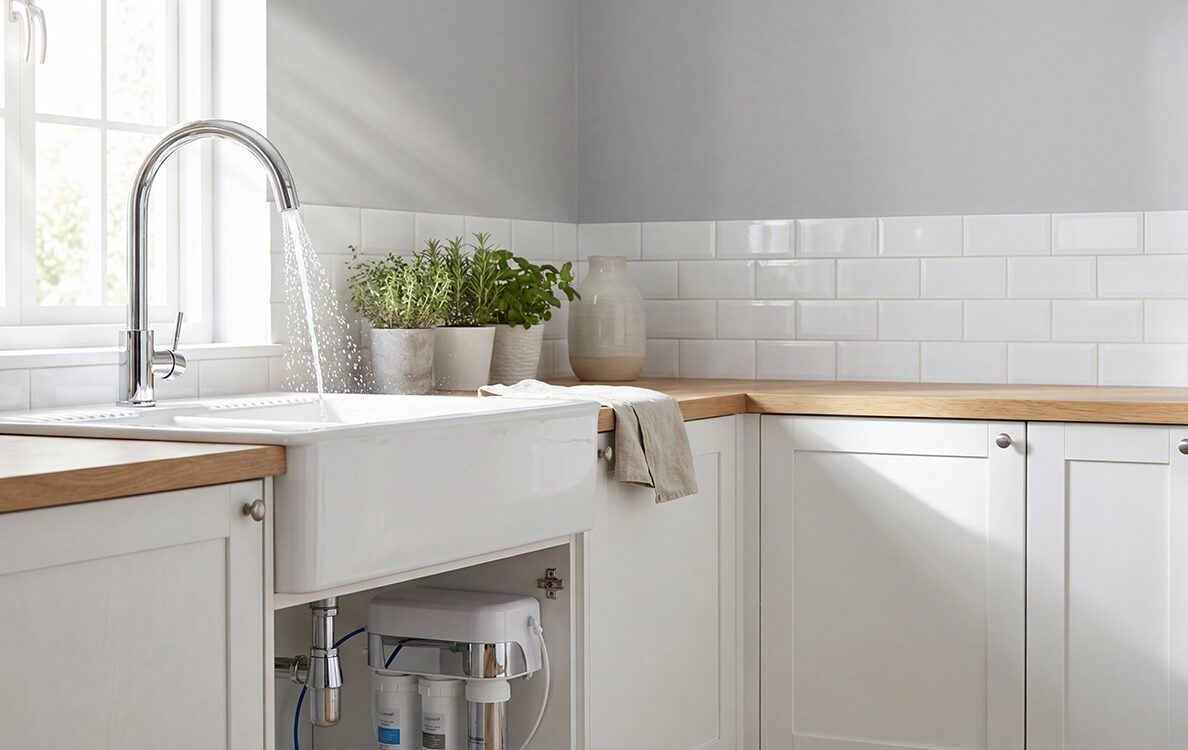
Farmhouse Sink Water Filtration: Best Options
Farmhouse sink water filtration depends on faucet configuration, cabinet space, sink depth and the contaminants you want to reduce. Confirm plumbing compatibility and leave enough room to replace cartridges. Compare verified reduction claims, flow rate, maintenance costs and whether a countertop or faucet-mounted option better suits the installation.

The right farmhouse sink water filter can remove impurities, improve taste, and provide peace of mind. Various options are available, ranging from simple to advanced systems, making it easier to find the best fit for your needs.
Key Takeaways
- Importance of clean drinking water in the kitchen
- Benefits of using a kitchen sink water filtration system
- Variety of farmhouse sink water filters available
- Factors to consider when choosing a water filter
- Improved health and well-being with filtered water
What is a Farmhouse Sink Water Filter?
The concept of a farmhouse sink water filter revolves around providing clean drinking water directly from the sink. A farmhouse sink water filter is a system designed to remove contaminants and impurities from the water supply, ensuring it is safe and pleasant to drink.
Benefits of Filtration in Farmhouse Sinks
Installing a water filter in a farmhouse sink offers numerous benefits, including improved taste and odor of water, reduction of harmful contaminants, and protection of appliances from scale buildup. Clean drinking water is essential for health, and a farmhouse sink water filter can provide this convenience.
“Having a water filter at your sink is like having a guardian for your drinking water, ensuring it’s always clean and safe.”
Common Filtration Methods
There are several common methods used in farmhouse sink water filters, including:
- Activated Carbon Filtration: Effective in removing chlorine, taste, and odor.
- Reverse Osmosis: Removes a wide range of contaminants, including dissolved solids.
- Ultraviolet (UV) Light: Kills bacteria and other microorganisms.
Each method has its advantages and can be chosen based on specific needs and water quality issues.
| Filtration Method | Contaminants Removed | Maintenance Needs |
|---|---|---|
| Activated Carbon | Chlorine, Taste, Odor | Regular Filter Replacement |
| Reverse Osmosis | Dissolved Solids, Heavy Metals | Periodic Membrane Replacement |
| UV Light | Bacteria, Viruses | UV Lamp Replacement |
Installation Considerations
When installing a farmhouse sink water filter, several factors need to be considered, such as the type of filtration method, space under the sink, and faucet compatibility.
It’s also crucial to consider the flow rate and whether the system needs to be connected to the cold water line or if it can be used with both hot and cold water.
Why Choose an Apron Sink Filtration System?
The apron sink filtration system is a game-changer for homeowners seeking clean drinking water directly from their kitchen sink. This system not only enhances the aesthetic appeal of the kitchen but also provides a reliable source of filtered water.
Advantages of Apron Sink Designs
Apron sink designs are known for their large, exposed front panel, which adds a touch of elegance to any kitchen. One of the key advantages of these designs is their ability to accommodate large pots and pans, making kitchen tasks more manageable.
Moreover, apron sinks are designed to be highly durable, with many models featuring a single-bowl design that simplifies cleaning and maintenance.
Top Features to Look For
When selecting an apron sink filtration system, there are several key features to consider:
- Filtration Efficiency: Look for systems with high-efficiency filters that can remove a wide range of contaminants.
- Ease of Installation: Opt for systems that are designed for straightforward installation, minimizing the need for professional plumbing services.
- Maintenance Requirements: Consider systems with easily replaceable filters and clear maintenance guidelines.
| Feature | Description | Benefit |
|---|---|---|
| High-Efficiency Filters | Removes up to 99% of contaminants | Cleaner drinking water |
| Easy Installation | Designed for DIY installation | Saves on plumbing costs |
| Simple Maintenance | Easy filter replacement | Less downtime for maintenance |
Maintenance Tips for Apron Sinks
To ensure the longevity of your apron sink filtration system, regular maintenance is crucial. Here are some tips:
- Regularly inspect and replace the filter cartridges as recommended by the manufacturer.
- Clean the sink basin and faucet regularly to prevent mineral buildup.
- Check for any signs of leaks or water damage around the sink and faucet.
By following these maintenance tips, you can enjoy clean drinking water and a functional kitchen for years to come.
Popular Types of Water Filters for Sinks
For homeowners seeking to improve their drinking water quality, understanding the different types of sink water filters is crucial. The right filtration system can significantly enhance the taste, odor, and safety of your drinking water.
The market offers a variety of sink water filtration systems, each with its unique benefits and drawbacks. Here, we’ll explore three of the most popular types: Activated Carbon Filters, Reverse Osmosis Systems, and Ceramic Filters.
Activated Carbon Filters
Activated carbon filters are among the most widely used sink water filters. They work by attracting and trapping impurities in the water through a process known as adsorption.
Benefits: These filters are effective at removing chlorine, improving taste and odor, and reducing certain volatile organic compounds (VOCs).
Drawbacks: They may not remove all contaminants, such as heavy metals or nitrates, and require regular replacement to maintain effectiveness.
Reverse Osmosis Systems
Reverse osmosis (RO) systems are highly effective at removing a broad range of contaminants from water, including dissolved solids, bacteria, and viruses.
Benefits: RO systems can significantly improve water quality by removing up to 99% of contaminants, making them a popular choice for households with well water or municipal water with known issues.
Drawbacks: They can be wasteful, generating a significant amount of wastewater, and may remove beneficial minerals from the water.
Ceramic Filters
Ceramic filters use a porous ceramic material to filter out impurities. They are known for their durability and effectiveness against bacteria and parasites.
Benefits: Ceramic filters are long-lasting, eco-friendly, and do not remove beneficial minerals from the water.
Drawbacks: They may not be as effective against dissolved solids or certain chemicals, and the ceramic element may need periodic cleaning or replacement.
| Filter Type | Effectiveness | Maintenance |
|---|---|---|
| Activated Carbon | Good for chlorine, taste, and VOCs | Regular replacement |
| Reverse Osmosis | Excellent for broad contaminant removal | Periodic membrane replacement |
| Ceramic | Effective against bacteria and parasites | Periodic cleaning or replacement |
Pull-Down Faucet Filters: An Overview
Pull-down faucet filters are revolutionizing kitchen sink experiences with their advanced filtration capabilities. These innovative systems are designed to provide clean drinking water directly from the faucet, enhancing both the functionality and style of the kitchen.

How Pull-Down Faucet Filters Work
Pull-down faucet filters integrate a filtration system directly into the faucet, allowing users to switch between regular water flow and filtered water with ease. The filtration process typically involves activated carbon or other advanced technologies to remove contaminants, improving the taste and quality of the water.
The mechanism is straightforward: when you need filtered water, you simply pull down the faucet’s sprayer, and the water passes through the filter before being dispensed. This process ensures that the water is clean and free from many common contaminants found in tap water.
Key Benefits of Using Faucet Filters
The benefits of using a pull-down faucet filter are numerous. Firstly, they provide convenience by eliminating the need for a separate filtration system or a dedicated faucet for filtered water. Secondly, they are often easy to install and maintain, with replaceable filter cartridges that can be swapped out as needed.
- Improved water taste and quality
- Convenience of having filtered water directly from the faucet
- Space-saving design that doesn’t require additional faucets or systems
- Ease of maintenance with replaceable filter cartridges
By choosing a pull-down faucet filter, homeowners can enjoy the benefits of filtered water without compromising on kitchen aesthetics or functionality. Whether you’re looking to upgrade your kitchen with a modern faucet or simply seeking a more efficient way to access clean drinking water, a pull-down faucet filter is a worthwhile consideration.
Best Farmhouse Sink Water Filters on the Market
When it comes to farmhouse sink water filtration, selecting the best system can be overwhelming due to the numerous options available. To make an informed decision, it’s crucial to explore the top brands and compare their features and prices.
Top Brands to Consider
Several brands stand out in the market for their quality and performance. ZeroWater is known for its advanced technology that removes virtually all dissolved solids, providing ultra-pure drinking water. Brita is another popular choice, offering a range of filters that improve taste and reduce contaminants. Aquasana is also noteworthy for its high-quality filters that are designed to last, providing clean drinking water without the need for frequent replacements.
Comparison of Features and Prices
Comparing the features and prices of different farmhouse sink water filters can help you find the best value for your money. Here’s a brief overview:
- ZeroWater ZD-018: This filter is known for its ability to remove up to 99.6% of dissolved solids. It’s priced around $200-$300.
- Brita Faucet Filter: Offers improved taste and odor reduction. It’s generally priced between $40-$60.
- Aquasana AQ-5300: This system provides high-quality filtration and is available for around $300-$400.
When choosing a farmhouse sink water filter, consider not only the initial cost but also the long-term expenses, such as replacement filters and maintenance.
Installation Issues with Farmhouse Sink Filters
Understanding the installation issues associated with farmhouse sink filters is crucial for homeowners who want to ensure a smooth and effective filtration system.
Common Challenges and Solutions
Installing a farmhouse sink filter can present several challenges, including compatibility issues with existing plumbing and the complexity of the installation process itself.
Common Challenges:
- Ensuring compatibility with the existing faucet and plumbing system
- Navigating the complexities of the installation process
- Dealing with potential leaks or water damage
Solutions:
- Carefully measure your sink and faucet to ensure the filter system is compatible.
- Follow the manufacturer’s instructions for installation, or consider hiring a professional.
- Test the system thoroughly after installation to check for leaks.
Hiring a Professional vs. DIY
When it comes to installing a farmhouse sink filter, homeowners often debate whether to hire a professional or undertake the task themselves.
Pros of Hiring a Professional:
- Expertise in handling complex installations
- Reduced risk of leaks or other installation-related issues
- Warranty and support from the installer
Pros of DIY Installation:
- Cost savings on labor
- Personal satisfaction of completing the task independently
- Flexibility to work at your own pace
Ultimately, the decision between hiring a professional and DIY installation depends on your comfort level with plumbing and your ability to follow complex instructions.
Maintenance Tips for Your Sink Filter System
To ensure your sink filter system operates at peak performance, regular maintenance is crucial. A well-maintained system not only provides clean drinking water but also extends the lifespan of the filter.
Regular Filter Replacement
One of the most critical aspects of maintaining your sink filter system is replacing the filter cartridges regularly. The frequency of replacement depends on the type of filter and the manufacturer’s recommendations, typically ranging from every 6 to 12 months.
- Check the manufacturer’s guidelines for replacement intervals.
- Monitor water quality and flow rate; a decrease in performance may indicate the need for replacement.
- Keep a record of replacement dates to ensure timely maintenance.
According to a study by the Water Quality Association, failing to replace filters regularly can lead to a significant decrease in water quality, potentially introducing contaminants into the water supply.
“Regular filter replacement is not just about maintaining the system’s efficiency; it’s also about ensuring the water you drink is safe and clean.”
Cleaning and Preventative Care
In addition to replacing filters, regular cleaning and preventative care can significantly enhance the performance and longevity of your sink filter system.
| Maintenance Task | Frequency | Benefit |
|---|---|---|
| Clean the filter housing | Every 3 months | Prevents bacterial growth |
| Inspect for leaks | Monthly | Ensures system integrity |
| Flush the system | Every 6 months | Removes sediment and debris |
For faucet mount water filters for apron sinks, it’s essential to follow the manufacturer’s instructions for cleaning and maintenance. Some systems may require specific cleaning solutions or procedures.
By following these maintenance tips, you can ensure your sink filter system continues to provide clean, safe drinking water for years to come. Regular maintenance not only enhances the system’s performance but also contributes to the overall health and well-being of your household.
Water Quality: Why Filtration Matters
The importance of having a reliable kitchen sink water filtration system cannot be overstated. With the increasing concerns over water pollution and contaminants, ensuring access to clean drinking water is crucial for maintaining a healthy household.
Understanding Water Contaminants
Water contaminants can range from heavy metals and pesticides to bacteria and viruses. These contaminants can enter the water supply through various means, including industrial waste, agricultural runoff, and aging infrastructure. Understanding the types of contaminants that may be present in your water is the first step in choosing the right filtration system.
- Heavy Metals: Lead, mercury, and arsenic can have serious health implications.
- Chemical Contaminants: Pesticides, herbicides, and industrial chemicals can affect water quality.
- Microbial Contaminants: Bacteria, viruses, and parasites can cause waterborne diseases.

Health Benefits of Filtered Water
Using a kitchen sink water filtration system can significantly improve the quality of your drinking water, providing numerous health benefits. Filtered water can reduce the risk of waterborne diseases, improve digestion, and even enhance the taste of water.
The health benefits of filtered water include:
- Reduced risk of gastrointestinal diseases
- Lower exposure to harmful chemicals and heavy metals
- Improved hydration due to better-tasting water
By investing in a quality filtration system, homeowners can ensure they are drinking clean, safe water, contributing to overall health and wellbeing.
Cost Factors for Farmhouse Sink Water Filters
The financial implications of choosing a farmhouse sink water filter extend beyond the initial purchase price. Understanding the various cost factors involved is essential for homeowners to make an informed decision that aligns with their budget and needs.
When evaluating the cost of farmhouse sink water filters, several key factors come into play. These include the type of filtration system, the brand, and the features offered. Additionally, the cost of installation, maintenance, and replacement filters must be considered.
Budget-Friendly Options
For homeowners on a budget, there are several affordable farmhouse sink water filter options available. These include:
- Basic activated carbon filters, which are effective at removing chlorine and improving taste and odor.
- Simple faucet-mounted filters that are easy to install and maintain.
- Countertop filters that offer a straightforward and cost-effective solution.
These budget-friendly options can provide a good starting point for those looking to improve their water quality without breaking the bank.
Long-term Savings vs. Initial Investment
While the initial cost of a farmhouse sink water filter is an important consideration, it’s equally crucial to think about the long-term savings. Although high-quality filters may require a larger upfront investment, they can lead to significant savings over time.
For instance, filters that are designed to last longer or have lower maintenance costs can reduce the overall cost of ownership. Moreover, by reducing the reliance on bottled water, homeowners can save money on their water bills and contribute to a more sustainable environment.
Key long-term benefits include:
- Reduced spending on bottled water.
- Lower maintenance and replacement costs for high-quality filters.
- Potential health benefits from consuming cleaner water, which may reduce medical expenses over time.
By weighing the initial investment against the long-term savings, homeowners can make a more informed decision about their farmhouse sink water filter choice.
Aesthetic Appeal of Filtration Systems
Filtration systems are not just about functionality; they also contribute to the aesthetic appeal of your kitchen. With the rise of farmhouse sink designs, the integration of water filtration systems has become a crucial aspect of kitchen decor.
How Filters Blend with Kitchen Decor
The design of modern filtration systems allows them to seamlessly blend with various kitchen decors. Whether you have a traditional, contemporary, or minimalist kitchen, there’s a filtration system that can complement your style. For instance, apron sink filtration systems are designed to be visually appealing, with sleek lines and finishes that match your kitchen’s aesthetic.
When choosing a filtration system, consider the overall design theme of your kitchen. If you have a rustic farmhouse-style kitchen, a filtration system with a vintage or bronze finish might be suitable. For a modern kitchen, a sleek and minimalist design would be more appropriate.
Choosing Stylish Faucet Designs
Faucet design plays a significant role in the overall aesthetic of your kitchen sink area. Pull-down faucet filters are a popular choice for farmhouse sinks due to their convenience and style. They come in various finishes, such as chrome, stainless steel, and bronze, allowing you to choose a design that complements your kitchen’s decor.
When selecting a faucet filter, consider factors like the color scheme, material, and overall style of your kitchen. A stylish faucet design not only enhances the visual appeal of your kitchen but also provides a functional solution for accessing filtered water.
Real User Experiences and Reviews
Users of farmhouse sink water filtration systems report significant improvements in water quality and taste. These systems have become increasingly popular among homeowners seeking cleaner and healthier drinking water.
Customer Testimonials
Many customers have shared their positive experiences with farmhouse sink water filtration systems. For instance, a homeowner in California noted that the system improved the taste of their drinking water and reduced the presence of contaminants.
- Improved Water Taste: Users have reported a noticeable difference in the taste of their water after installing a filtration system.
- Reduced Contaminants: Effective removal of contaminants such as lead, chlorine, and sediment has been a common theme in customer testimonials.
- Ease of Installation: Many users have praised the ease of installation of modern farmhouse sink water filtration systems.
Case Studies of Successful Installations
Several case studies highlight the success of farmhouse sink water filtration systems in various settings. For example, a family in New York installed a top-rated sink water filter and reported a significant reduction in waterborne pathogens.
- A family in Florida installed a farmhouse sink water filtration system and experienced improved water quality, which was confirmed through regular water testing.
- A homeowner in Texas reported that the filtration system not only improved the taste of their water but also reduced their reliance on bottled water.
These real user experiences and reviews provide valuable insights into the effectiveness and benefits of farmhouse sink water filtration systems. By considering the experiences of others, prospective buyers can make more informed decisions.
Making the Right Choice for Your Kitchen
Selecting the ideal farmhouse sink water filter involves evaluating several key factors to consider, including filtration efficiency, maintenance requirements, and aesthetic appeal. A suitable kitchen sink water filtration system not only ensures clean drinking water but also complements your kitchen’s design.
Key Considerations
When choosing a farmhouse sink water filter, consider the type of contaminants you want to remove, the filter’s lifespan, and the overall cost. It’s essential to assess the filter’s compatibility with your existing kitchen setup and its ability to integrate with your faucet or apron sink design.
Enhancing Your Kitchen Experience
A well-chosen kitchen sink water filtration system can significantly enhance your kitchen experience by providing clean and fresh-tasting water. Brands like Moen and Kohler offer a range of stylish and functional options that can blend seamlessly with your kitchen decor.
By carefully evaluating the factors to consider and selecting a suitable farmhouse sink water filter, you can enjoy a more efficient, safe, and enjoyable kitchen experience.