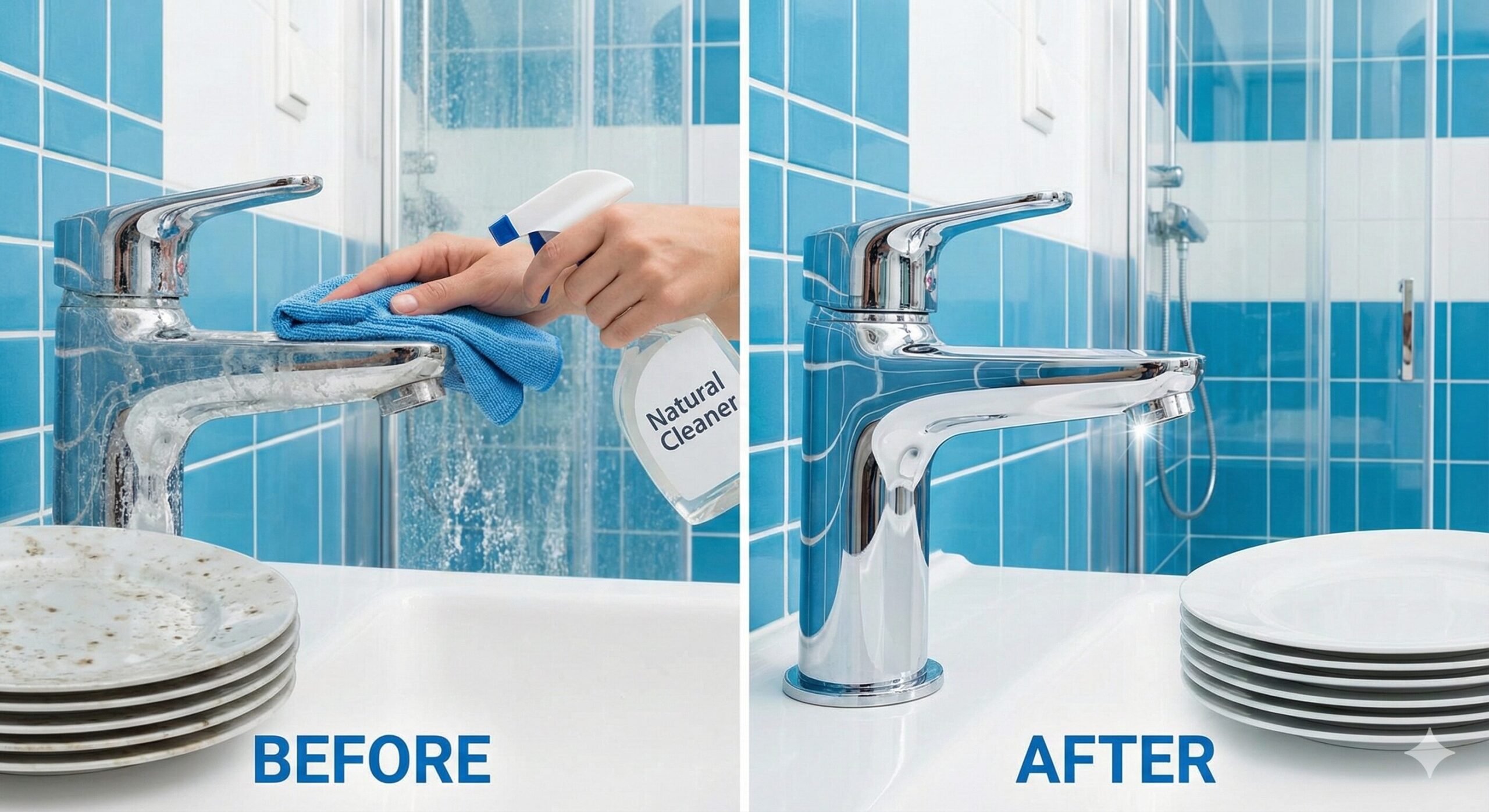
How to Fix Hard Water Stains on Fixtures & Dishes
Hard water stains on fixtures and dishes usually come from mineral deposits left as water evaporates. Diluted vinegar may help on compatible surfaces, but follow care instructions and avoid acidic cleaners on stone or other sensitive finishes. If deposits return quickly, a hardness test can help determine whether softening or another scale-control approach is appropriate.

Understanding the cause of these stains is crucial to finding an effective solution. Hard water contains high levels of minerals like calcium and magnesium, which can leave behind stubborn stains. In this guide, we’ll explore various methods to tackle this problem, including DIY solutions and practical tips for prevention.
Key Takeaways
- Identify the causes of hard water stains on fixtures and dishes.
- Learn effective DIY methods to remove these stains.
- Discover ways to prevent future stains from forming.
- Understand the impact of hard water on household appliances.
- Explore maintenance tips for fixtures and dishes.
Understanding Hard Water and Its Effects
Understanding the nature of hard water is crucial to addressing the stains it causes on household surfaces. Hard water contains high levels of minerals such as calcium and magnesium, which can lead to various problems in the home.
What is Hard Water?
Hard water is defined by its high concentration of dissolved minerals, particularly calcium and magnesium. These minerals are absorbed as water passes through soil and rock, resulting in water that is rich in these substances. The presence of these minerals is what differentiates hard water from soft water.
Effects of Hard Water: The high mineral content in hard water can cause scaling, which is the formation of a hard, crusty deposit on surfaces. This scaling can lead to a variety of issues, including reduced water flow in pipes and appliances, and the formation of unsightly stains on fixtures and dishes.
How Hard Water Causes Stains
When hard water evaporates, it leaves behind the minerals it contains, such as calcium and magnesium. These minerals can form stubborn stains on surfaces, particularly on fixtures like faucets and showerheads, and on dishes. The stains are often white or off-white and can be difficult to remove without the right cleaning techniques.
DIY hard water stain removal often involves using natural cleaners that can dissolve these mineral deposits. Vinegar, for example, is a common household item that can be used to remove hard water stains due to its acidic properties.
Common Areas Affected by Hard Water
Hard water can affect various areas of the home, including the kitchen and bathroom. Fixtures such as faucets, sinks, and toilets are commonly affected, as are appliances like dishwashers and washing machines. Dishes and glassware can also be stained by hard water spots.
- Faucets and showerheads
- Dishes and glassware
- Appliances like dishwashers
- Sinks and toilets
Using a natural limescale cleaner can help mitigate the effects of hard water in these areas. Regular cleaning and maintenance can also prevent the buildup of mineral deposits.
Identifying Hard Water Stains
Identifying hard water stains is crucial for maintaining the cleanliness and longevity of your fixtures and dishes. These stains are a common issue in many households, particularly in areas with hard water.
Visual Signs of Hard Water Stains
Hard water stains typically appear as white or off-white spots or streaks on surfaces. They can also manifest as a cloudy or hazy residue, especially on glassware and dishes. Recognizing these visual cues is the first step in addressing the problem.
Some common characteristics of hard water stains include:
- White or off-white discoloration
- Spots or streaks on fixtures and dishes
- Cloudy or hazy appearance on glass surfaces
Differences Between Stains and Other Buildup
It’s essential to distinguish between hard water stains and other types of buildup or residue. Unlike soap scum or grease, hard water stains are caused by mineral deposits, primarily calcium and magnesium.
A simple test to differentiate hard water stains from other buildup is to apply a small amount of vinegar or a limescale remover. If the stain dissolves or lightens, it’s likely a hard water stain.
For a more detailed understanding, let’s examine the differences between hard water stains and other common types of residue in a comparative table:
| Characteristics | Hard Water Stains | Soap Scum | Grease or Grime |
|---|---|---|---|
| Cause | Mineral deposits (Ca, Mg) | Soap residue | Food and oil residue |
| Appearance | White/off-white spots or streaks | Dull, sticky film | Greasy, dirty film |
| Removal Method | Vinegar, limescale removers | Soap scum removers, scrubbing | Degreasers, hot water |
DIY Solutions for Removing Hard Water Stains
Hard water stains on fixtures and dishes can be unsightly, but fortunately, there are effective homemade remedies. These DIY solutions are not only cost-effective but also environmentally friendly, making them a great alternative to commercial cleaning products.
Vinegar as a Natural Cleaner
Vinegar is a versatile and effective cleaner for removing hard water stains. Its acidity helps break down the mineral deposits that cause these stains. To use vinegar, simply soak the stained area in a solution of equal parts water and white vinegar for a few hours or overnight. Then, scrub the area gently with a soft cloth or sponge and rinse thoroughly.
Tip: For tougher stains, you can heat the vinegar solution before soaking. This can help loosen the mineral deposits more effectively.
Baking Soda for Tough Stains
Baking soda is another natural cleaner that can be used to remove hard water stains. It works by neutralizing the alkalinity of the mineral deposits, making it easier to remove them. To use baking soda, make a paste by mixing it with a small amount of water. Apply the paste to the stained area and let it sit for about 30 minutes. Then, scrub the area with a non-abrasive scrubber and rinse.
Combining Ingredients for Effective Results
For particularly stubborn stains, combining vinegar and baking soda can be very effective. The mixture creates a gentle fizzing action that helps lift the stains off the surface. To make this mixture, combine 1 cup of vinegar with 1 tablespoon of baking soda. Apply the mixture to the stained area, let it sit for 15-20 minutes, and then scrub and rinse.

| Method | Ingredients | Instructions |
|---|---|---|
| Vinegar Soak | Equal parts water and white vinegar | Soak for a few hours or overnight, then scrub and rinse. |
| Baking Soda Paste | Baking soda and water | Apply paste, let sit for 30 minutes, scrub and rinse. |
| Vinegar and Baking Soda Mix | 1 cup vinegar, 1 tablespoon baking soda | Apply mixture, let sit for 15-20 minutes, scrub and rinse. |
Limescale Removers: Best DIY Recipes
Removing limescale doesn’t have to involve harsh chemicals; there are several effective DIY recipes you can try at home. These homemade solutions are not only eco-friendly but also cost-effective, utilizing common household ingredients.
Simple Citrus and Vinegar Mix
A straightforward and efficient way to tackle limescale is by mixing citrus juice with vinegar. The acidity in both ingredients works together to break down mineral deposits. To make this solution:
- Mix equal parts of freshly squeezed lemon or orange juice and white vinegar.
- Apply the mixture directly to the limescale stains.
- Let it sit for about 30 minutes before scrubbing and rinsing.
Borax and Water Solution
For tougher limescale buildup, a borax and water paste can be highly effective. Borax acts as a natural mineral that helps in removing stubborn stains. To prepare this paste:
- Mix 1 tablespoon of borax with 1 cup of water to form a paste.
- Apply the paste to the affected area and let it sit overnight.
- Scrub the area gently and rinse thoroughly in the morning.
Essential Oils for a Fresh Scent
After removing limescale, you can leave your fixtures and surfaces smelling fresh by incorporating essential oils into your cleaning routine. Not only do they provide a pleasant aroma, but some also have properties that can help in preventing future limescale buildup.
- Add a few drops of lemon or lavender essential oil to your cleaning solution for a refreshing scent.
- Essential oils can also be used in a spray bottle with water as a final rinse to leave surfaces smelling clean.
These DIY recipes offer a practical and natural approach to limescale removal, making it easier to maintain your home’s fixtures and appliances without exposing yourself to harsh chemicals.
Fixing Hard Water Problems in Dishwashers
Dishwashers are not immune to the effects of hard water, which can cause limescale buildup and affect their performance. Hard water contains high levels of minerals such as calcium and magnesium, which can lead to the formation of unsightly stains and reduce the efficiency of your dishwasher.
Recognizing Dishwasher Hard Water Issues
The first step in addressing hard water problems in your dishwasher is to recognize the signs. Common indicators include:
- White or off-white spots on dishes and glassware
- A filmy residue on utensils and dishes
- Increased noise or vibration during the wash cycle
- Reduced cleaning performance
As noted by a leading appliance expert, “Hard water can significantly reduce the lifespan of your dishwasher if not properly addressed.”
“Regular maintenance is key to preventing hard water damage.”
Tips for Regular Maintenance
Regular maintenance is crucial to mitigating the effects of hard water on your dishwasher. Here are some tips:
- Run a cleaning cycle with a dishwasher cleaner or a mixture of equal parts water and white vinegar every 1-2 months.
- Check and clean the dishwasher’s filter regularly to prevent clogging.
- Use a water softener or a dishwasher-specific water conditioner to reduce mineral buildup.
Regular maintenance not only improves performance but also extends the lifespan of your dishwasher.
| Maintenance Task | Frequency | Benefits |
|---|---|---|
| Cleaning Cycle | Every 1-2 months | Removes grease and limescale |
| Filter Check | Monthly | Prevents clogging and improves efficiency |
| Water Softener Use | Ongoing | Reduces mineral buildup |
When to Seek Professional Help
If you’ve tried regular maintenance and still experience issues with hard water stains or your dishwasher’s performance, it may be time to seek professional help. A professional can assess the situation and provide guidance on the best course of action, whether it’s repairing or replacing your dishwasher.
As a homeowner, being proactive about maintaining your dishwasher can save you time and money in the long run. By recognizing the signs of hard water issues and taking steps to address them, you can enjoy a more efficient and effective cleaning experience.
Preventing Future Hard Water Stains
The key to preventing hard water stains lies in a combination of the right equipment and regular maintenance. By understanding the causes of these stains and implementing effective preventive measures, you can keep your fixtures and dishes spotless.
Installing a Water Softener
One of the most effective ways to prevent hard water stains is by installing a water softener. This device removes minerals like calcium and magnesium that cause water to be hard, thereby reducing the likelihood of limescale buildup on your fixtures and dishes. When choosing a water softener, consider the size of your household and the level of hardness in your water to select the most appropriate model.

Routine Cleaning Strategies
Regular cleaning is crucial in preventing hard water stains. Using a limescale remover DIY solution, such as a mixture of vinegar and water, can help dissolve mineral deposits before they become a problem. For tougher stains, a paste made from baking soda and water can be effective. It’s also important to dry your fixtures and dishes after cleaning to prevent water spots.
- Wipe down fixtures after use to remove water droplets.
- Clean dishes and fixtures regularly with a gentle cleanser.
- Use a microfiber cloth to dry surfaces and prevent water spots.
Using Specialized Cleaning Products
For particularly stubborn hard water stains, specialized cleaning products can be invaluable. Look for products that are designed to remove hard water deposits and limescale. These products can be used on a variety of surfaces, from glass and metal to ceramic and porcelain. Always follow the manufacturer’s instructions to ensure safe and effective use.
By combining these strategies—installing a water softener, maintaining a routine cleaning schedule, and using the right cleaning products—you can effectively prevent hard water stains and keep your home looking its best.
Choosing the Right Cleaning Tools
Effective removal of hard water stains requires not just the right cleaning solutions, but also the appropriate cleaning tools. Having the correct tools can significantly enhance the cleaning process, making it more efficient and less labor-intensive.
Best Cleaning Cloths for Fixtures and Dishes
When it comes to cleaning fixtures and dishes, the type of cloth used can greatly impact the outcome. Microfiber cloths are highly recommended due to their ability to effectively trap dirt and grime without scratching surfaces.
For tougher stains, a non-abrasive scrubbing cloth can be used. These cloths are designed to remove stubborn stains without damaging the surface of fixtures or dishes.
- Microfiber cloths for general cleaning
- Non-abrasive scrubbing cloths for tougher stains
- Soft cotton cloths for drying and polishing
Recommended Brushes for Tough Stains
For areas with stubborn hard water stains, using the right brush can be particularly helpful. A soft-bristled brush is ideal for delicate surfaces, while a stiff-bristled brush can be used for more resilient areas.
It’s also beneficial to use brushes with ergonomic handles for better grip and control, reducing the strain on your hands during the cleaning process.
| Brush Type | Surface | Effectiveness |
|---|---|---|
| Soft-bristled | Delicate fixtures | High |
| Stiff-bristled | Tough stains on dishes | Very High |
Eco-Friendly Options for Cleanup
For those looking for eco-friendly options, there are several choices available. Reusable cloths made from bamboo or cotton are not only effective but also environmentally friendly.
Additionally, brushes with biodegradable bristles offer a sustainable alternative to traditional brushes. These eco-friendly tools can be just as effective in removing hard water stains while being gentler on the environment.
By choosing the right cleaning tools, you can make the process of removing hard water stains more efficient and effective. Whether you opt for microfiber cloths, the right brushes, or eco-friendly alternatives, having the appropriate tools at your disposal is key to achieving spotless fixtures and dishes.
Addressing Hard Water in Other Household Areas
The effects of hard water are far-reaching, influencing multiple aspects of home maintenance. While fixtures and dishes are commonly affected, hard water’s impact is not limited to these areas alone.
Impact on Appliances
Hard water can significantly reduce the lifespan and efficiency of household appliances. Appliances such as water heaters, dishwashers, and washing machines are particularly vulnerable to limescale buildup.
- Water heaters: Limescale accumulation can lead to increased energy consumption and eventual appliance failure.
- Dishwashers: Hard water spots on dishes and utensils can be a persistent issue, and limescale can clog dishwasher filters.
- Washing machines: The buildup of minerals can affect the machine’s performance, leading to less efficient washing cycles.
| Appliance | Effects of Hard Water | Limescale Build-up Solutions |
|---|---|---|
| Water Heater | Increased energy consumption, potential failure | Regular descaling, using a water softener |
| Dishwasher | Spots on dishes, clogged filters | Using a rinse aid, regular filter cleaning |
| Washing Machine | Less efficient washing, potential for damage | Regular cleaning, using a water softener |
Hard Water and Plumbing Issues
Hard water can also have a detrimental effect on household plumbing. The minerals present in hard water can lead to limescale buildup in pipes, potentially causing clogs and reducing water pressure.
Common plumbing issues due to hard water include:
- Clogged pipes
- Reduced water pressure
- Leaky faucets and toilets
Treating Hard Water in Bathrooms
Bathrooms are another area where hard water can cause significant issues, from unsightly stains on sinks and showers to soap scum buildup.
Effective strategies for treating hard water in bathrooms include:
- Regular cleaning with vinegar or limescale removers
- Installing a showerhead filter to reduce mineral content
- Using a water softener to treat the water supply
By understanding the broader implications of hard water and implementing effective solutions, homeowners can mitigate its negative effects and maintain a more efficient and cleaner home.
Conclusion: Enjoying Spotless Fixtures and Dishes
Removing and preventing hard water stains is achievable with the right techniques and cleaning solutions. By understanding the causes of these stains and using effective DIY methods, homeowners can enjoy spotless fixtures and dishes.
Effective Solutions Recap
Using a natural limescale cleaner, such as a mixture of vinegar and baking soda, can effectively remove hard water stains from surfaces. Regular maintenance, including cleaning dishwasher filters and checking for hard water dishwasher problems, can also help prevent future stains.
Tackling Hard Water Challenges
With the knowledge gained from this guide, homeowners can confidently tackle hard water challenges. By implementing routine cleaning strategies and considering the installation of a water softener, individuals can protect their fixtures, dishes, and appliances from the damaging effects of hard water.
By applying these solutions, homeowners can maintain a cleaner, more efficient household, reducing the need for harsh chemicals and costly repairs.