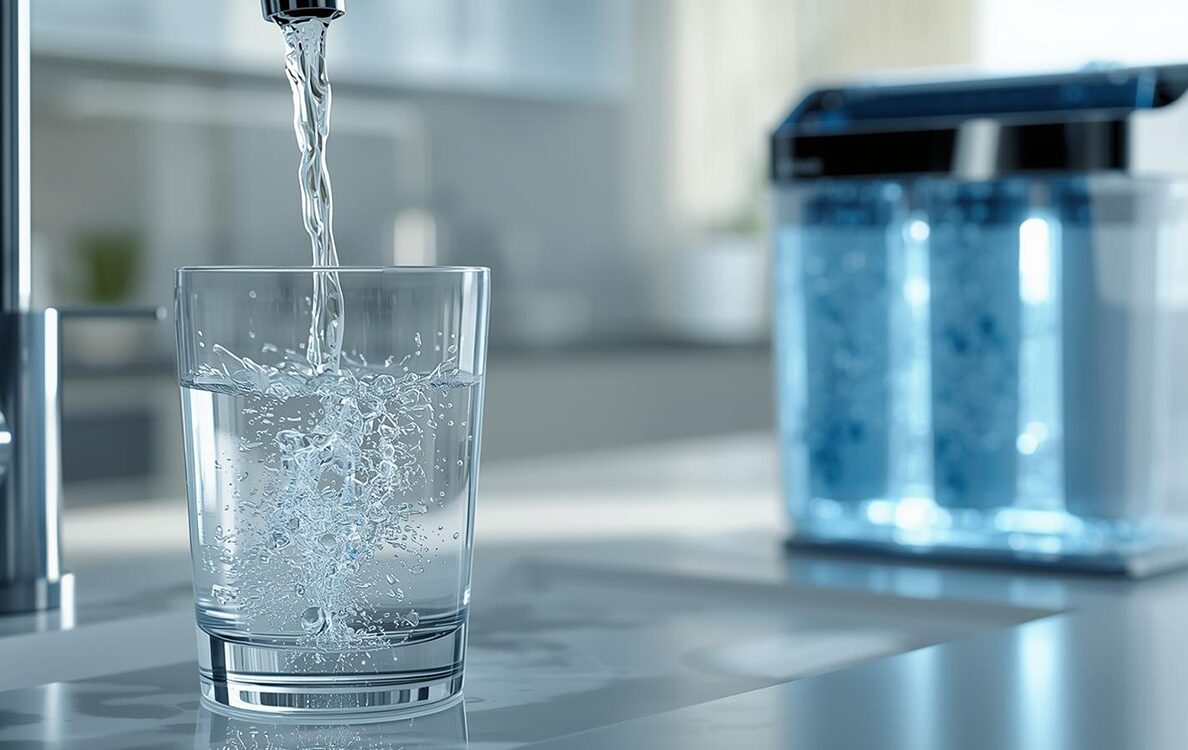
Microplastics in Tap Water: Filters That Effectively Remove Them.
The presence of microplastics in drinking water poses significant health risks, prompting the need for effective filtration solutions. Utilizing advanced 1-micron filters can remove microplastics, ensuring that consumers have access to plastic-free water. Furthermore, these systems are often lab-tested for removal efficacy, providing confidence in their ability to deliver clean and safe water for daily consumption. Investing in such technology not only safeguards health but also promotes environmental responsibility. Could tiny plastic particles be in the cup you drink from every morning—and can a household system actually stop them?

This buyer’s guide helps you pick a reliable water filter that meets verified standards and real test results. Studies such as Orb Media’s bottled analysis (~325 particles per liter) and NGWA findings in Illinois (15.2 particles per liter) show why this matters.
We focus on products with third‑party certification like NSF/ANSI 401 via IAPMO or WQA. Leading options include the AquaTru Carafe and Classic (IAPMO‑certified countertop RO with high efficiency and a glass carafe option), British Berkefeld with Ultra Sterasyl (stainless gravity ceramic + carbon), and the Brita Elite pitcher (WQA‑certified carbon block).
Expectations: reverse osmosis systems typically deliver top performance—EPA cites ~99% removal potential—while certified carbon or ceramic systems offer budget and material advantages. This guide explains sizes, health risks, design choices, efficiency, and cost so shoppers can choose with confidence.
Key Takeaways
- Evidence shows measurable plastic particles in drinking sources; certified products outperform claims.
- Reverse osmosis often achieves the highest reduction rates (~99% cited by EPA).
- Look for NSF/ANSI 401 certification from IAPMO or WQA when comparing products.
- Top picks: AquaTru Carafe & Classic, British Berkefeld Ultra Sterasyl, and Brita Elite.
- Check pore size, contaminant coverage, materials, and total cost before buying.
Why Microplastics in Drinking Water Matter in the United States Today
Trace plastic particles have turned up across U.S. sources, making household treatment a practical public-health step.
Research shows contamination across groundwater, surface supplies, and packaged beverages. Orb Media found an average of ~325 particles per liter in bottled samples across nine countries. The NGWA reported measurable detections (15.2 particles per liter) in two Illinois aquifers. California began quarterly testing of drinking sources in fall 2023, signaling a shifting regulatory landscape.
Everyday exposure adds up: people ingest particles from tap faucets, bottled drinks, and airborne deposition that lands on exposed surfaces. The environment now circulates these materials widely due to persistent plastics use and slow breakdown across watersheds.
- Public health context: scientists are studying possible impacts, but uncertainty remains.
- Practical action: choose point‑of‑use systems with third‑party certification rather than relying on unverified claims.
- Equity note: affordable certified options can help households protect themselves while infrastructure and rules catch up.
Combining certified in‑home treatment with simple lifestyle changes offers the most effective, immediate way to reduce exposure.
What Microplastics Are and the Sizes Filters Must Capture
Tiny plastic fragments range widely in size, and that range dictates what treatment will actually stop them. Define the target first: particles under 5 mm are considered microplastics, with many relevant fragments falling below one micron and nanoplastics down to ~100 nm.
From 5 mm down to nanoplastics: why pore size is everything
Match the pores of a filter to the particle size you want to trap. Reverse osmosis membranes reach ~0.001 µm, and ultrafiltration sits near 0.02 µm. By contrast, common refrigerator elements are often ~20 µm and miss tiny fragments.
Common sources: textiles, packaging, tire wear, and household dust
Household sources shed plastic fibers and fragments: synthetic clothing, tire wear, broken packaging, and indoor dust all add load to household water paths. Managing those sources lowers the input burden before treatment.
“Understanding particle size is the most practical step to choose the right way forward.”
- Multi-stage systems (sediment + carbon + membrane) protect tight membranes and boost capture efficiency.
- Ceramic plus carbon blocks can reach sub‑micron performance, but rely on verified ratings.
What Studies Reveal About Levels in Water and Bottled Water
Published research has begun to quantify just how many small plastic particles people may ingest daily.
Key published findings
Orb Media’s bottled investigation found an average of about 325 particles per liter across many brands, with big variation by lot and label.
Extreme counts appear in some academic reviews. One Penn State Behrend–linked analysis reported samples as high as ~10,000 particles per liter, showing occasional outliers.
Groundwater and policy snapshots
NGWA sampling detected roughly 15.2 particles per liter in two Illinois aquifers, proving source contamination can reach supplies before treatment.
California began quarterly testing of drinking sources in fall 2023, a precedent that pushes public reporting and future standards.
“Differences in methods and size cutoffs make direct comparisons tricky; standardized protocols are needed.”
- Analytical methods vary; some approaches count smaller fragments and raise reported totals.
- Because bottled options do not guarantee zero exposure, choose certified systems that handle sub‑micron material.
- While more research is ongoing, current data support taking protective steps at home now.
Documented Health Risks Linked to Microplastics Exposure
Recent research raises concern that tiny plastic particles and their additives may affect hormone balance, gut health, and organ systems. Reviews cited by Fresh Water Systems and other studies note cellular damage, inflammatory reactions, and signals tied to metabolic and reproductive outcomes.

Endocrine disruption: BPA, phthalates, and hormone balance
Many plastic fragments carry additives such as BPA and phthalates. These chemicals act as endocrine disruptors and can interfere with normal hormone signaling.
Possible effects include altered reproductive hormones and metabolic shifts seen in some animal and cell studies. While human causation is still under review, the mechanistic evidence is notable.
Gut and immune impacts: inflammation, IBD signals, oxidative stress
Laboratory and review articles report that small particles can irritate intestinal tissues. Researchers document inflammation, oxidative stress, and immune activation after exposure.
Some epidemiologic work links higher exposure markers with signals similar to inflammatory bowel disease and altered gut barrier function. These findings justify cautious action now.
Organ accumulation concerns: liver, kidneys, brain; the nanoplastics question
There is growing worry that nanoplastics may cross biological barriers. Preliminary studies show translocation to the liver, kidneys, and even the brain in animal models.
Accumulation could worsen organ-level oxidative stress and impair function over time. Long-term causal pathways remain under study but merit precaution.
“While definitive human long-term studies are limited, the balance of evidence supports minimizing ingestion of these particles.”
| Risk Area | Evidence | Practical Action | Certainty Level |
|---|---|---|---|
| Endocrine (BPA, phthalates) | Cell and animal studies; mechanistic links to hormones | Limit exposure; prefer certified point-of-use systems | Moderate |
| Gut & Immune | Inflammation, oxidative stress; IBD associations emerging | Reduce ingestion pathways; improve diet and indoor dust control | Low–Moderate |
| Organ accumulation (nanoplastics) | Animal translocation studies to liver, kidneys, brain | Choose systems validated for sub‑micron capture; reduce overall exposure | Preliminary |
- Takeaway: while long-term causal proof in people is limited, current findings justify practical risk reduction.
- Certified point-of-use filter systems that validate sub‑micron performance can reduce one key exposure route.
- Combine treatment with broader steps—diet, air and dust control—to lower overall plastic particle intake.
How Microplastics Enter Tap Water Systems
Multiple pathways let small plastic debris migrate from the environment into household supplies.
Surface runoff and wastewater effluent carry fibers and fragments from streets, laundry, and treatment plants into source reservoirs. Those source inputs feed both municipal systems and private wells.
Degraded plastic waste breaks down over years into ever-smaller pieces that can move through soils and reach aquifers. For example, detections in Illinois aquifers measured about 15.2 particles per liter.
Atmospheric deposition and indoor dust also deposit microfibers onto catchments and distribution lines. Even storage and plastic piping can shed additional particles before a cup is poured.
Why this matters: because these ways continuously replenish particles, a point-of-use approach offers a steady last line of defense.
“Addressing multiple source pathways is the most practical way to lower daily exposure.”
- Look for systems that validate sub‑micron capture to stop the smallest particles.
- Combine source control—reduce plastic use and dust—with certified point-of-use treatment for best results.
Certification 101: What NSF/ANSI 401, 42/53/58 & 372 and IAPMO/WQA Mean
Understanding which standards apply helps you compare systems on equal footing. Certifications spell out test conditions, particle size thresholds, and percent reduction so buyers can judge claims against data.
NSF/ANSI 401: the microplastics benchmark
NSF/ANSI 401 specifically tests for particles about 0.5–1 µm and requires at least an 85% reduction under standard conditions. That benchmark shows a unit can trap many tiny fragments that matter for daily exposure.
What the other standards cover
- 42 — aesthetic claims (taste, odor, chlorine).
- 53 — health‑related contaminants (select chemicals and metals).
- 58 — reverse osmosis membrane performance.
- 372 — lead‑free materials compliance.
Why third‑party certification matters
Certifying bodies such as IAPMO and WQA validate performance beyond marketing language. Look up model numbers in official databases before purchase.
“A certification listing is the clearest proof a system met defined test criteria.”
Note: some carbon and ceramic elements carry 401 listings. Always confirm the certified scope and replacement schedule to keep a unit performing as expected.
Filtration Technologies Ranked by Effectiveness Against Microplastics
Not all treatment approaches are equal; some technologies trap the tiniest particles while others mainly improve taste.
Reverse osmosis membranes (~0.001 µm)
Top performer: reverse osmosis systems use very tight membranes that EPA cites as having about a 99% potential to cut plastic particles and many other contaminants, like heavy metals.
Ultrafiltration (0.01–0.1 µm)
Ultrafiltration captures sub‑micron particles while often preserving dissolved minerals. Some units use membranes near 0.02 µm and produce little to no wastewater, which suits conservation‑minded households.
Ceramic + carbon block combinations
When certified for sub‑micron capture, ceramic cartridges paired with carbon blocks can meet many household goals. They balance particle control with removal of taste and chemicals and are user‑friendly to maintain.
Activated carbon alone
Granular and basic carbon excel at improving taste and odor but generally lack the pore size to trap the smallest fragments. Use them for chemical and aesthetic gains, not as a sole particle barrier.
Distillation
Distillation separates most impurities by phase change. It effectively isolates tiny solid particles, though it is slow, uses electricity, and has a higher operating cost than many systems.
Match technology to your goals: pore size needs, budget, space, and maintenance must guide any purchase.
microplastics in tap water filters removal: Buyer Criteria That Actually Matter
Match lab-proven metrics to real needs. Pick a system that proves it captures the particle size you care about, while handling other household contaminants and keeping ongoing costs manageable.

Pore size and verified certification
Prioritize pore size targets and NSF/ANSI 401 verification. That listing shows a unit tested to reduce 0.5–1 µm particles by ≥85% under standard conditions.
Full contaminant profile
Look beyond particles to PFAS, lead, and bacteria. Check for NSF/ANSI 42, 53, or 58 listings to confirm what the system removes. A broad certified scope protects health as well as taste.
Flow, efficiency, and wastewater
Consider flow rates and recovery. For RO, a better efficiency ratio lowers wastewater; AquaTru Classic lists about a 4:1 ratio with moderate waste. Match capacity to household use.
Materials that contact your water
Prefer glass or stainless steel collection and BPA/BPS‑free plastics to avoid reintroducing plastic after treatment. British Berkefeld’s stainless tank is a good example.
Total cost of ownership
Compare capacity, cost per gallon, replacement parts, and warranty. Examples: AquaTru Carafe ≈ $0.19/gal, Classic ≈ $0.11/gal, British Berkefeld ≈ $0.09/gal. Confirm certified listings and replacement availability before buying.
| Model | Certification | Capacity (gal) | Cost/gal |
|---|---|---|---|
| AquaTru Carafe | IAPMO → NSF/ANSI 401 | 300 | $0.19 |
| AquaTru Classic | IAPMO → NSF/ANSI 401 | 300–1,200 | $0.11 |
| British Berkefeld Ultra Sterasyl | NSF/ANSI 401 | 800 | $0.09 |
“Confirm model-level certification and replacement part supply before you commit.”
Top Certified Products Our Sources Highlight
We present certified, lab‑backed products that balance proven capture with durable materials and real‑world value.
How these picks were chosen: each model below carries third‑party listings and clear test outcomes. Capacity, materials, and ongoing cost are summarized so you can match a product to household priorities like countertop space and daily throughput.
AquaTru Carafe
Why pick it: countertop reverse osmosis system with IAPMO certification to NSF/ANSI 401. Testing showed it eliminated detected contaminants. Its glass carafe avoids post‑treatment plastic contact.
Key specs: overall score 9.57; capacity ~300–1,200 gal; efficiency 4:1; cost ≈ $0.19/gal.
AquaTru Classic
Why pick it: same RO performance and certifications as the Carafe, but with larger storage and lower running cost. Housings use BPA/BPS‑free Tritan for durability.
Key specs: score 9.54; capacity 600–1,200 gal; 4:1 efficiency; cost ≈ $0.11/gal.
British Berkefeld Ultra Sterasyl
Why pick it: stainless steel gravity system with NSF/ANSI 401‑listed ceramic plus carbon elements. No power or priming required and very low operating cost.
Key specs: score 8.64; capacity ~800 gal per cartridge; cost ≈ $0.09/gal; durable stainless tank and spigot.
Brita Elite Pitcher
Why pick it: budget carbon block option with WQA listing to 401. Good for taste, chlorine, and some metals, though it has limited scope versus RO systems for the smallest particles.
Key specs: capacity ~120 gal per cartridge; affordable initial price; best where aesthetic improvement and modest contaminant reduction are primary goals.
“Verify model‑level certification listings and replacement availability before you buy.”
| Model | Certification | Capacity (gal) | Cost/gal | Notes |
|---|---|---|---|---|
| AquaTru Carafe | IAPMO → NSF/ANSI 401 | 300–1,200 | $0.19 | Glass carafe; eliminated detected contaminants in tests; countertop RO |
| AquaTru Classic | IAPMO → NSF/ANSI 401 | 600–1,200 | $0.11 | Larger capacity; Tritan storage; countertop RO; 4:1 efficiency |
| British Berkefeld Ultra Sterasyl | NSF/ANSI 401 | 800 | $0.09 | Stainless steel gravity system; ceramic + carbon cartridges; low OPEX |
| Brita Elite Pitcher | WQA → NSF/ANSI 401 | 120 | Varies | Budget carbon block; good chlorine and some metals reduction |
Final note: these products span RO, ceramic, and carbon approaches. Choose based on household demand, material preferences, and which contaminants (like heavy metals) you most need addressed. Confirm current certification listings before purchase to ensure ongoing quality.
Reverse Osmosis Systems: The Gold Standard for Removing Microplastics
Reverse osmosis systems use tightly spaced membranes and staged prefilters to strip out the smallest suspended and dissolved particles.

How multi‑stage RO works
Prefiltration: a sediment stage protects downstream media from grit and large debris. This extends life and preserves performance.
Activated carbon: removes chlorine and organics that harm membranes and improves taste.
RO membrane (~0.001 µm): pressure forces water through pores far smaller than most plastic particles, metals, and many microbes.
Post‑filters/removal polish: optional carbon or remineralizers improve flavor and adjust mineral content for drinking water quality.
Pros and cons
- Pros: EPA‑cited performance can approach ~99% reduction of plastic particles and broad cuts to contaminants, including some bacteria and heavy metals.
- Cons: RO generates some wastewater, often has slower flow than UF, and requires periodic membrane and prefilter changes.
- Countertop products like AquaTru offer plug‑and‑play convenience and better efficiency (example: ~4:1) versus older home RO designs.
“Pressure‑driven membranes target sub‑micron and near‑nanoplastic sizes that other point‑of‑use products often miss.”
| Feature | Typical Spec | Why it matters |
|---|---|---|
| Membrane pore size | ~0.001 µm | Captures very small plastic particles and many dissolved contaminants |
| Waste ratio | 1:1 to 4:1 (varies) | Higher efficiency reduces wastewater and operating cost |
| Maintenance | Prefilter & membrane changes annually/biannually | Keeps product quality and certified performance |
Choosing an RO system: pick models with current certifications, adequate throughput, non‑plastic collection options, and documented test data to match your home needs and quality goals.
When to Choose UF, Ceramic, or Carbon Block Instead of RO
If wastewater, mineral loss, or installation complexity matter, other treatment choices can deliver a smarter balance.
UF for scarce supplies and mineral retention
Ultrafiltration membranes (~0.02 µm) capture small particles and many bacteria while keeping dissolved minerals. They run fast, make no wastewater, and suit homes where conservation and flow rate matter.
Ceramic plus carbon for simplicity and stainless builds
Gravity ceramic cartridges with a carbon stage offer low maintenance and stainless collection that avoids post‑treatment plastic contact. Select models carry verified sub‑micron listings and deliver steady performance with low ongoing cost.
What refrigerator cartridges can and cannot do
Most fridge cartridges have coarse nominal ratings (~20 µm) and do not reliably stop tiny fragments unless the product carries explicit sub‑micron certification. Use them for taste and odor, not as a primary particle barrier.
“Match the system to your utility report, household throughput, and how much maintenance you will do.”
- Choose UF when you need fast flow, no wastewater, and mineral retention.
- Choose ceramic + carbon for simplicity, stainless contact, and low operating cost.
- Avoid relying on most fridge cartridges unless certification proves sub‑micron performance.
Costs, Maintenance, and Real‑World Use at Home
Owning a certified home system means balancing upfront price, ongoing parts, and daily convenience. Expect different lifespans, per‑gallon costs, and chores depending on technology and model.
Filter lifespans, capacities, and cost per gallon
Compare real numbers: AquaTru Carafe averages ~$0.19/gal (300–1,200 gal capacity). AquaTru Classic runs about $0.11/gal (600–1,200 gal). British Berkefeld ceramic systems yield ~800 gal per element at ≈ $0.09/gal. Brita Elite cartridges are smaller (~120 gal) and suit light use or travel.
Use these figures to project annual spend. Multiply household daily use by 365 and match to capacity to know when to replace cartridges.
Setup ease: countertop plug‑and‑play vs. under‑sink installs
Countertop plug‑and‑play units offer minimal tools and instant access. They suit renters or kitchens where you want quick setup and easy moves.
Under‑sink installs give a steady, out‑of‑sight supply and higher flow. They need basic plumbing skills or a pro install and can require a shutoff during service.
Materials safety and avoiding post‑filtration plastic re‑exposure
Choose glass or stainless for carafes and storage to avoid reintroducing plastic after treatment. Stainless spigots and glass jugs cut the chance that treated liquid picks up new contaminants.
“Regular maintenance and correct storage keep certified performance working as intended.”
- Maintenance routine: Replace sediment prefilters annually, change RO membranes per manufacturer (often 2–3 years), and clean ceramic elements per schedule.
- Life‑extending tips: Avoid exposing membranes to free chlorine; flush new cartridges before use; keep a replacement calendar or app reminder.
- Monitor quality: Track taste, odor, and flow rate; sudden changes often signal a needed replacement.
Practical takeaway: match capacity to household demand, prefer countertop for convenience or under‑sink for continuous supply, and favor non‑plastic contact points to protect long‑term quality and peace of mind.
Beyond Filters: Practical Ways to Reduce Microplastic Exposure
Practical habits at the laundry, kitchen, and closet level make a measurable difference over years.
Choose durable containers. Replace single‑use plastic bottles and food storage with glass or stainless steel to cut shedding and reduce a common ingestion pathway.
Cut clothing fiber loads
Install a laundry fiber trap or use a guppybag to catch loose fibers before they enter drains. These devices reduce what passes downstream and into local water sources.
Prefer natural fabrics like cotton or wool for many garments. Wash synthetics less often and choose gentle cycles to lower shedding.
Dispose and recycle responsibly
Proper disposal slows fragmentation that feeds the broader environment. Recycle where possible and avoid littering to limit long‑term breakdown into tiny particles.
Combine habits with treatment
Behavioral changes and certified water filters work together. One reduces inputs; the other cuts what reaches your tap and your cup.
“Small household steps compound. Over years, widespread action can shrink pollution and lower exposure.”
- Use glass or stainless for bottles and storage.
- Install laundry traps and pick natural fabrics.
- Wash synthetics less often and on low agitation.
- Recycle and dispose of plastics responsibly.
- Combine these steps with certified water filters to address nanoplastics and other risks.
Conclusion
DDetected detections across bottled and source samples make this a real public concern. Studies report averages around ~325 particles per liter and measurable aquifer counts, so household action is sensible for safer drinking water.
Reverse osmosis systems lead performance, with EPA‑cited potential near ~99% capture when paired with staged prefilters. Certified units and lab data matter because they show tested percent reductions for tiny particles and other contaminants.
Look for NSF/ANSI 401 listings or equivalent IAPMO/WQA verification and consider models like AquaTru Carafe/Classic (IAPMO → 401), British Berkefeld Ultra Sterasyl (NSF/ANSI 401), or Brita Elite (WQA → 401). Choose non‑plastic storage to limit re‑exposure and pair a system with simple lifestyle steps to lower overall exposure.
Next steps: check your local water report, confirm model certification, and pick the best water filters that match household needs for dependable, long‑term protection.