
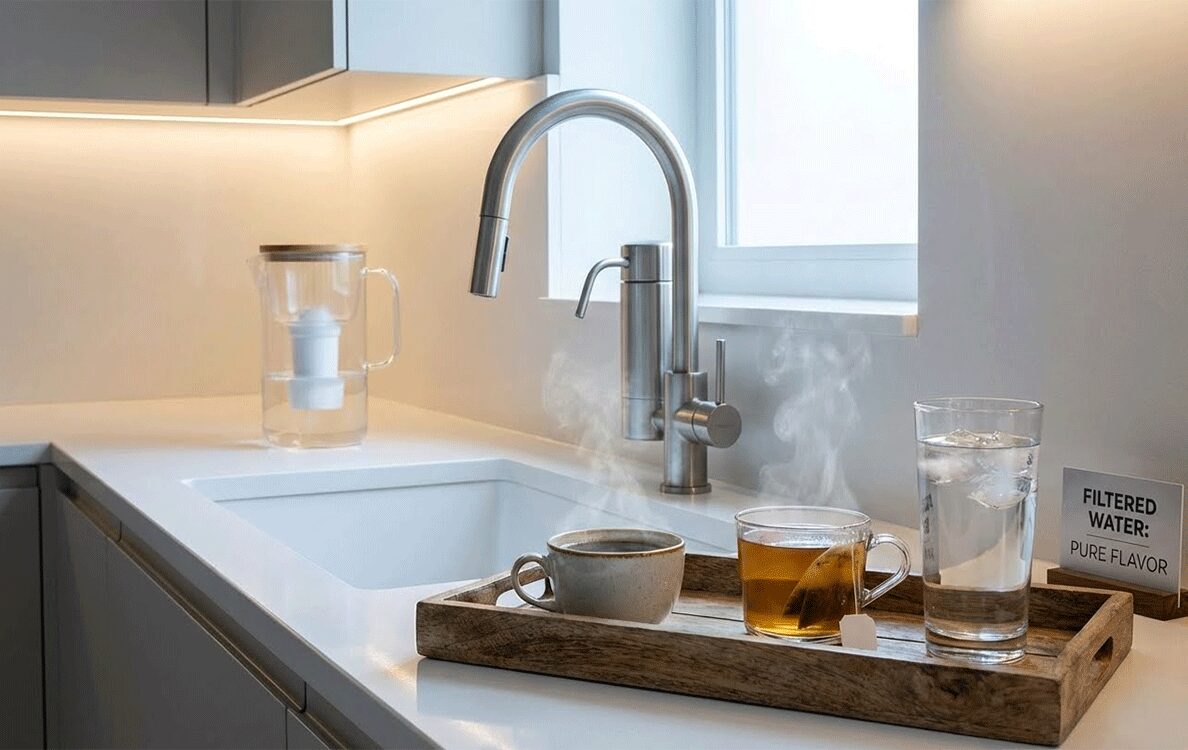
Best Water Filters for Coffee and Tea: Improve Taste and Quality
Water filters for coffee and tea can affect flavor by reducing chlorine taste or changing mineral content, but the best choice depends on the source water and brewing equipment. Compare filter performance, hardness, cartridge life and ongoing cost. Follow brewer or kettle guidance because unsuitable water can contribute to scale or inconsistent brewing results.

The quality of the water used can greatly impact the taste, making it crucial to choose a suitable filter. In this article, we will explore the best options available, helping you to achieve the ideal TDS levels for your favorite brews.
Key Takeaways
- Importance of using a water filter for coffee and tea
- How the right filter can improve taste and quality
- Understanding TDS levels for optimal brewing
- Top recommendations for water filters
- Tips for choosing the best filter for your needs
Why Water Quality Matters for Coffee and Tea
The quality of water used in brewing coffee and tea significantly impacts the final taste and aroma. Water is not just a passive ingredient in the brewing process; it actively influences the extraction of flavors and oils from coffee beans or tea leaves.
The Role of Water in Brewing
Water is the largest component of brewed coffee and tea, making up about 98-99% of the final product. Its quality affects the extraction process, with ideal water characteristics enhancing the flavor and aroma. The right water quality ensures a balanced extraction, while poor quality water can lead to under or over-extraction, resulting in an unbalanced taste.
How Water Affects Flavor Profile
The flavor profile of coffee and tea is significantly influenced by the water used. Impurities in water, such as chlorine or heavy metals, can impart unwanted flavors, while water with the right mineral balance can enhance the natural flavors of the coffee or tea. For instance, water with high levels of calcium and magnesium can bring out the sweetness in coffee, whereas water with low mineral content may result in a flat taste.
Understanding TDS Levels
Total Dissolved Solids (TDS) refer to the concentration of dissolved substances in water, including minerals and other inorganic compounds. TDS levels are crucial in brewing as they affect the extraction rate and flavor profile. The ideal TDS range for brewing coffee and tea is between 150-300 ppm (parts per million). Water with TDS levels outside this range can result in suboptimal flavor extraction.
Understanding TDS levels and their impact on brewing is essential for coffee and tea enthusiasts. By adjusting the TDS levels, brewers can fine-tune the flavor profile to their liking. This can be achieved by using water filters that can adjust TDS levels or by using water with known TDS characteristics.
Top Water Filters for Coffee Machines
The quality of water used in coffee machines plays a crucial role in determining the taste of the brewed coffee, highlighting the need for an effective water filter.
Best Types of Filters for Flavor Enhancement
When selecting a water filter for your coffee machine, it’s essential to consider the type of filter that will best enhance the flavor of your coffee. Activated carbon filters are popular for their ability to remove chlorine and other impurities that can affect the taste. Reverse osmosis filters offer a more thorough filtration process, removing a wide range of contaminants.
Here is a comparison of different filter types:
| Filter Type | Contaminants Removed | Effect on Taste |
|---|---|---|
| Activated Carbon | Chlorine, Volatile Organic Compounds (VOCs) | Improves taste by removing impurities |
| Reverse Osmosis | Dissolved Solids, Heavy Metals, Bacteria | Significantly reduces impurities, can affect mineral content |
Features to Look for in Coffee Water Filters
When choosing a water filter for your coffee machine, there are several key features to consider. Look for filters with high contaminant removal rates and those that are easy to install and maintain. Additionally, consider the filter’s compatibility with your coffee machine and its certification by reputable third-party organizations.
- Contaminant removal rate
- Ease of installation and maintenance
- Compatibility with your coffee machine
- Certification by third-party organizations
Popular Brands Reviewed
Some popular brands for coffee machine water filters include Brita, known for their activated carbon filters, and Pur, which offers a range of filter options. When selecting a brand, consider factors such as filter effectiveness, cost, and customer reviews.
Keurig: Descaling Naturally
Descaling your Keurig naturally is an essential maintenance task that ensures your machine continues to brew great-tasting coffee. Over time, mineral deposits from water can build up inside the machine, affecting its performance and longevity. Regular descaling helps maintain the machine’s efficiency and prevents damage.
Why Descaling is Important
Descaling is crucial because it removes the mineral buildup that can lead to reduced machine performance and potentially cause it to malfunction. Mineral deposits, such as lime scale, can clog the machine’s internal parts and affect the taste of your coffee. By descaling regularly, you can prevent these issues and ensure your Keurig continues to function optimally.
As Consumer Reports notes, “Descaling is one of the most important maintenance tasks for coffee machine owners.” Regular descaling not only improves the taste of your coffee but also prolongs the lifespan of your machine.
Natural Descaling Solutions
There are several natural descaling solutions you can use for your Keurig. One popular option is white vinegar, which is effective at removing mineral deposits without leaving harsh chemical residues. Mix equal parts water and white vinegar in the water reservoir, and run a brewing cycle. Repeat this process until the reservoir is empty, then run a few cycles with just water to rinse.
Another natural descaling solution is citric acid, which is also effective at removing mineral buildup. You can purchase citric acid at most health food stores or online. Follow the manufacturer’s instructions for the correct dosage. Citric acid is a powerful descaling agent and is environmentally friendly.
“Using natural descaling solutions like vinegar or citric acid is not only effective but also safe for your machine and the environment.”
How Often to Descale Your Keurig
The frequency of descaling depends on the water quality in your area and how often you use your Keurig. As a general rule, descales your Keurig every 3 to 6 months. If you live in an area with hard water, you may need to descale more frequently.
To determine if your Keurig needs descaling, look for signs such as reduced water flow, increased brewing time, or a change in the taste of your coffee. Regular descaling will help maintain your machine’s performance and ensure great-tasting coffee.

Choosing the Right TDS Level for Brewing
Brewing the perfect cup of coffee or tea starts with understanding the role of Total Dissolved Solids (TDS) in your water. TDS refers to the concentration of dissolved substances in water, including minerals, salts, and other inorganic compounds.
What is TDS and Why It Matters
TDS is a critical parameter in brewing because it affects the extraction of flavors from coffee or tea leaves. Water with the right TDS level can enhance the flavor, while water with too high or too low TDS can result in an unbalanced taste. Understanding TDS is essential for achieving the perfect brew.
The ideal TDS range for brewing is generally considered to be between 150 and 300 parts per million (ppm). However, the optimal TDS can vary depending on the type of coffee or tea being brewed, as well as personal taste preferences.
Ideal TDS Range for Coffee and Tea
For coffee, a TDS level between 150 and 250 ppm is often recommended, as it allows for the optimal extraction of flavors. For tea, the ideal TDS range can be slightly broader, typically between 100 and 300 ppm, depending on the type of tea. Experimenting with different TDS levels can help you find the perfect balance for your taste buds.
Testing TDS Levels at Home
To determine the TDS level of your brewing water, you can use a TDS meter. These handheld devices are relatively inexpensive and provide a quick and accurate measurement of the TDS in your water. Regularly testing your water’s TDS can help you adjust your brewing water to achieve the ideal flavor.
By understanding and controlling the TDS level in your brewing water, you can significantly improve the taste and quality of your coffee or tea. Whether you’re a coffee aficionado or a tea enthusiast, paying attention to TDS can elevate your brewing game.
Benefits of Using a Coffee Water Filter
A coffee water filter is an essential tool for any coffee enthusiast looking to elevate their brewing game. By understanding the benefits of using a water filter, coffee lovers can appreciate the value it brings to their daily cup.
Improved Flavor and Aroma
One of the primary benefits of using a coffee water filter is the significant improvement in the flavor and aroma of your coffee. Unfiltered water can contain impurities and minerals that affect the taste of your coffee. By using a water filter, you can remove these impurities, resulting in a cleaner and more balanced flavor profile. This is particularly important for coffee aficionados who appreciate the nuanced flavors of specialty coffee.
Protection Against Scale Buildup
Scale buildup is a common issue in coffee machines, particularly in areas with hard water. Scale buildup can lead to reduced machine performance and even damage over time. A water filter helps to prevent scale buildup by removing minerals that cause scaling. This not only prolongs the life of your coffee machine but also ensures that it continues to perform optimally. For Keurig owners, this means less frequent descaling and a reduced risk of machine failure.
Cost Savings Over Time
While the initial investment in a coffee water filter may seem significant, it can lead to substantial cost savings over time. By reducing the need for frequent descaling and prolonging the life of your coffee machine, a water filter can help you save money on maintenance and repairs. Additionally, using a water filter can reduce your reliance on bottled water or other filtered water solutions, further reducing your costs.
In conclusion, the benefits of using a coffee water filter are multifaceted, ranging from improved flavor and aroma to protection against scale buildup and cost savings. By investing in a quality water filter, coffee enthusiasts can enhance their brewing experience and enjoy better-tasting coffee for years to come.
Comparing Filter Types: Carbon vs. Reverse Osmosis
Water filters play a vital role incoffee machine maintenance, with carbon and reverse osmosis systems offering distinct advantages. The right filter can enhance the flavor of your coffee and prolong the lifespan of your machine.
When deciding between carbon and reverse osmosis filters, it’s essential to understand their differences and how they impact water quality for coffee machines.
Advantages of Carbon Filters
Carbon filters are known for their ability to remove chlorine, odors, and tastes from water, improving the overall flavor of your coffee. They are also relatively inexpensive and easy to replace.
One of the key benefits of carbon filters is their ability to preserve beneficial minerals in the water, which can enhance the flavor profile of your coffee. However, they may not be as effective in removing certain contaminants like heavy metals or nitrates.

Understanding Reverse Osmosis Systems
Reverse osmosis (RO) systems, on the other hand, use a semi-permeable membrane to remove a wide range of contaminants from water, including dissolved solids, bacteria, and viruses. RO systems can be highly effective in producing very pure water.
However, RO systems can also remove beneficial minerals, potentially resulting in water that is too pure and may affect the taste of your coffee. Additionally, RO systems often require more maintenance than carbon filters, including regular membrane replacement.
Which is Best for Your Coffee Machine?
The choice between a carbon filter and a reverse osmosis system depends on your specific needs and preferences. If you prioritize flavor and mineral preservation, a carbon filter might be the better choice. For those seeking highly purified water and are willing to invest in maintenance, an RO system could be more suitable.
Ultimately, understanding the strengths and weaknesses of each filter type will help you make an informed decision that enhances your coffee brewing experience.
DIY Water Filtration Methods
DIY water filtration is a simple and cost-effective way to improve the taste of your coffee and tea. For those who own a Keurig, descaling naturally is also a crucial maintenance task that can be complemented by effective water filtration.
Simple Household Solutions
You don’t need to buy expensive equipment to start filtering your water. Simple household items can be used to create effective filtration systems. For instance, using a pitcher filter or even a DIY setup with sand, charcoal, and gravel can significantly improve water quality.
- Use a clean container or pitcher with a lid.
- Add a layer of activated charcoal at the bottom.
- Follow with a layer of sand and then gravel.
- Pour water through the layers to filter it.
How to Make a Homemade Filter
Creating a homemade water filter is a fun and educational project. Here’s a simple guide:
- Cut the bottom off a plastic bottle.
- Place a coffee filter or a piece of cloth over the mouth of the bottle.
- Add layers of sand, charcoal, and gravel inside the bottle.
- Pour water through the filter to clean it.
Pros and Cons of DIY Filtration
While DIY water filtration methods are cost-effective and can be fun to implement, they have their pros and cons.
- Pros: Cost-effective, customizable, and educational.
- Cons: May not remove all contaminants, requires regular maintenance, and effectiveness can vary.
For Keurig owners, using a DIY filtration method can be a preliminary step before considering best water filters for Keurig available in the market.
Maintenance Tips for Water Filters
Proper maintenance of your water filter is crucial for optimal performance and longevity. Regular upkeep ensures that your coffee and tea continue to taste their best, and your coffee machine remains free from scale buildup.
How to Clean Your Filter
Cleaning your water filter regularly is essential to remove any accumulated debris and mineral deposits. For most filters, a simple rinse under running water is sufficient. However, some filters may require a more thorough cleaning using a mixture of water and white vinegar. It’s essential to consult your filter’s user manual for specific instructions.
Descaling your coffee machine is also part of maintaining your water filter, as scale buildup can affect the filter’s performance. Use a descaling solution recommended by your coffee machine’s manufacturer to avoid damaging the machine.
Signs It’s Time to Replace Your Filter
Knowing when to replace your water filter is vital for maintaining water quality. Signs that your filter needs replacement include a decrease in water flow rate, an increase in sediment, or a change in the taste or odor of the water. Most filters have a recommended replacement schedule, usually every 1-3 months, depending on usage and manufacturer’s guidelines.
Tips for Long-Lasting Filter Performance
To maximize the lifespan and effectiveness of your water filter, follow these tips:
- Regularly clean your filter according to the manufacturer’s instructions.
- Monitor the TDS (Total Dissolved Solids) level in your water to ensure it’s within the ideal range for coffee and tea brewing.
- Replace your filter as recommended by the manufacturer.
Maintaining the ideal TDS level is crucial for achieving the perfect brew. The ideal TDS range for coffee and tea is typically between 150-300 mg/L.
| TDS Level (mg/L) | Effect on Brewing |
|---|---|
| Below 150 | May result in under-extracted coffee or tea, lacking flavor. |
| 150-300 | Ideal range for balanced flavor and optimal extraction. |
| Above 300 | Can lead to over-extraction, resulting in bitter taste. |
By following these maintenance tips and being mindful of your water’s TDS level, you can enjoy better-tasting coffee and tea while prolonging the life of your coffee machine and water filter.
Frequently Asked Questions About Coffee Water Filters
Coffee enthusiasts often have questions about using water filters with their coffee machines. Understanding the role of water quality in brewing can significantly enhance the flavor and aroma of your coffee.
Common Concerns and Solutions
One common concern is the impact of Total Dissolved Solids (TDS) on the taste of coffee. Using a water filter for coffee machines can help achieve optimal TDS levels for brewing. For Keurig users, preventing scale buildup is crucial for maintaining the machine’s performance and longevity. Regular descaling and using a water filter can help with Keurig scale buildup prevention.
Troubleshooting TDS Issues
If you’re experiencing issues with your coffee’s taste, it might be related to the TDS levels in your water. Testing your water’s TDS and adjusting your TDS levels for brewing can make a significant difference. Many coffee aficionados find that using a water filter designed for coffee machines helps to achieve the ideal balance.
Expert Recommendations
Experts recommend regularly checking and maintaining your water filter to ensure optimal performance. Choosing the right type of filter, whether it’s a carbon filter or a reverse osmosis system, depends on your specific needs and the type of coffee machine you’re using.



Hello, i read your blog occasionally and i own a similar one and i was just wondering if you get a lot of spam responses? If so how do you reduce it, any plugin or anything you can advise? I get so much lately it’s driving me insane so any assistance is very much appreciated.
Hello, thank you for reading and for your question. I do receive spam occasionally, but I manually review and filter all comments before approving them, as this gives me full control over what gets published. Additionally, I use a spam-filtering plugin like Akismet, which helps block most automated spam before it ever reaches the moderation queue. It’s been quite effective for me. Hope this helps, and best of luck with your blog!