Best Water Filter Pitchers for Chloramine Removal
When selecting a water filter pitcher for chloramine removal, it is crucial to consider options that have been TDS tested for effectiveness. Brands such as Brita and ZeroWater offer distinct advantages, warranting a thorough comparison in terms of filtration capabilities and overall performance. Additionally, some pitchers are designed specifically to filter fluoride, catering to those concerned about this compound in their drinking water. Ensuring that your water filter pitcher meets these criteria will significantly enhance the quality of your water. Drinking water is essential for our health, but it’s not always safe from contaminants like chloramine. Chloramine is a disinfectant commonly used in municipal water treatment. However, it can impart an unpleasant taste and odor to water. Using a water filter pitcher is an effective way to remove these impurities.

Top brands like Brita and ZeroWater offer water filter pitchers designed to remove chloramine and other contaminants. These products are not only efficient but also easy to use and maintain.
Key Takeaways
- Efficient removal of chloramine from drinking water
- Top brands like Brita and ZeroWater offer effective solutions
- Easy to use and maintain water filter pitchers
- Improves taste and odor of drinking water
- Cost-effective alternative to other filtration systems
Understanding Chloramine and Its Effects on Water Quality
Understanding the role of chloramine in water treatment is crucial for assessing its impact on water quality. Chloramine is widely used as a disinfectant in municipal water treatment processes, playing a significant role in ensuring the water is safe to drink.
What is Chloramine?
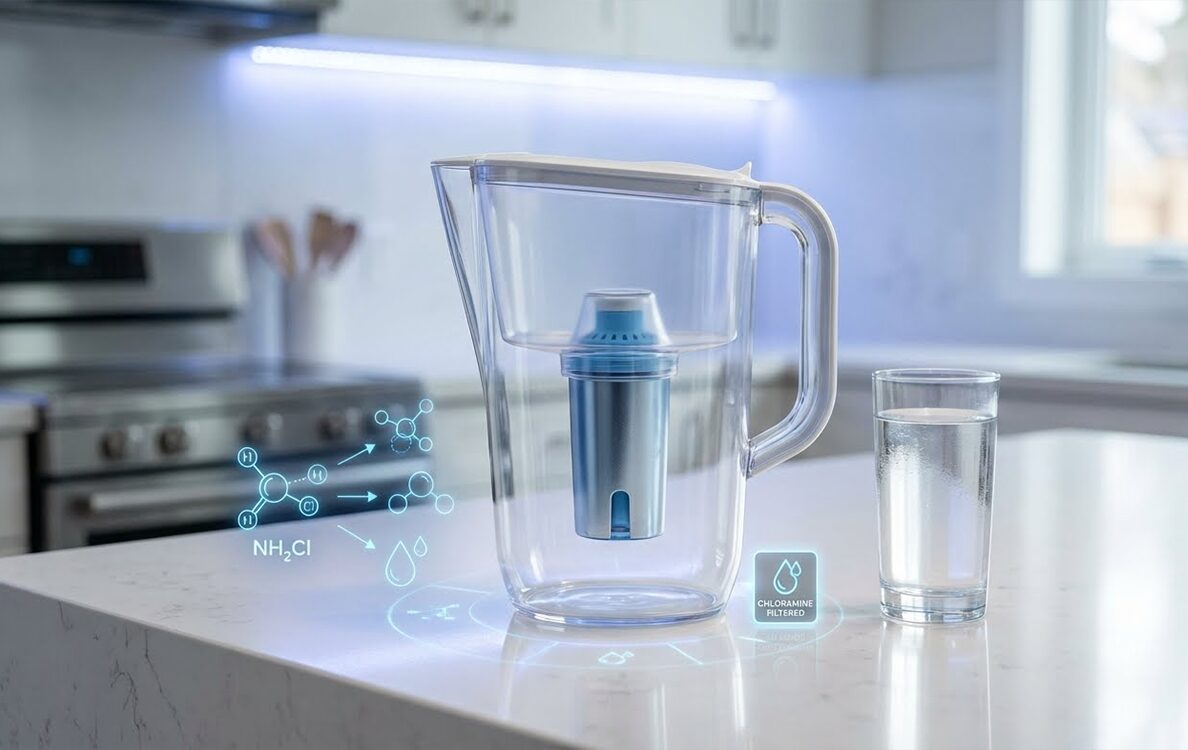
Chloramine is a compound formed from chlorine and ammonia. It is used as a disinfectant because it is more stable and lasts longer in the water distribution system compared to chlorine alone. The use of chloramine has become common practice in many water treatment facilities due to its effectiveness in controlling bacteria and other pathogens.
How Chloramine Affects Taste and Smell
One of the noticeable effects of chloramine in drinking water is its impact on taste and smell. Chloramine can give water a distinct chemical or metallic taste and odor, which many people find unpleasant. The intensity of the taste and smell can vary depending on the concentration of chloramine and individual sensitivity.
- The chemical taste can be more pronounced in hot water.
- Some people may be more sensitive to the smell of chloramine.
- Using a water filter can help mitigate these issues.
Health Concerns Related to Chloramine
While chloramine is effective against bacteria and viruses, there are health concerns associated with its presence in drinking water. Some studies suggest that long-term consumption of chloramine-treated water may have health implications, including potential effects on the thyroid and an increased risk of certain cancers. However, it’s essential to note that the evidence is still being researched and debated.
- Potential health risks include thyroid problems.
- Some research indicates a possible link to certain cancers.
- Removing chloramine from water can be achieved with the right filtration systems.
To remove chloramine from water, households can consider using water filter pitchers that are specifically designed to remove chloramine. Understanding these health concerns is crucial for making informed decisions about drinking water treatment.
Importance of Water Filter Pitchers
Filtering your drinking water is a simple yet effective way to ensure it’s safe and tastes good, and water filter pitchers make it easy. With the increasing awareness of contaminants in tap water, using a water filter pitcher has become a practical solution for many households.
Benefits of Filtering Your Water
Using a water filter pitcher offers numerous benefits. Firstly, it improves the taste and odor of your drinking water by removing chlorine and other contaminants that can give water an unpleasant taste or smell.
Secondly, filtering your water can reduce exposure to harmful contaminants. Tap water can contain a variety of contaminants, including lead, pesticides, and industrial chemicals, which a water filter pitcher can help remove.
How Water Filter Pitchers Work
Water filter pitchers work by passing tap water through a filter, typically made of activated carbon or other filtration media, which traps contaminants and improves water quality. The filtered water is then stored in the pitcher, ready for drinking.
The effectiveness of a water filter pitcher depends on the type of filter used. Some filters are designed to remove specific contaminants, such as lead or chloramine, while others offer broader protection against a wide range of contaminants.
Key Features to Look for in a Filter Pitcher
When selecting a water filter pitcher, there are several key features to consider. Firstly, look for a pitcher that has a high-quality filter capable of removing a wide range of contaminants, including chlorine, lead, and other harmful substances.
- Filter replacement indicators to remind you when it’s time to change the filter.
- A durable and BPA-free construction to ensure the pitcher is safe to use.
- A reasonable capacity to meet your household’s needs without needing constant refills.
By considering these factors, you can choose a water filter pitcher that meets your needs and provides clean, great-tasting drinking water.
Brita Water Filter Pitchers: An Overview
For those seeking a reliable water filter pitcher, Brita is often the first brand that comes to mind. With a long history of providing clean drinking water, Brita has established itself as a leader in the water filtration market. As we explore Brita water filter pitchers, we’ll examine their filter technology, effectiveness against chloramine, and what consumers have to say about their experiences.
Overview of Brita’s Filter Technology
Brita’s filter technology is designed to remove a wide range of contaminants from drinking water, improving both taste and quality. Their filters use a combination of activated carbon and ion exchange technology to reduce impurities. Activated carbon is particularly effective at removing chlorine and other chemicals that can affect the taste of water.

Effectiveness Against Chloramine
While Brita filters are known for their effectiveness against chlorine, their ability to remove chloramine is also noteworthy. Chloramine, a disinfectant used in some municipal water supplies, can be more challenging to remove than chlorine. Brita’s filters have been shown to reduce chloramine levels, although the effectiveness can vary depending on the specific product model and usage.
It’s essential to check the specifications of the Brita filter pitcher you’re using to understand its capabilities against chloramine.
Consumer Reviews and Feedback
Consumer reviews of Brita water filter pitchers are generally positive, with many users praising the improvement in water taste and the convenience of the pitchers. However, some users have noted that the filters need to be replaced regularly to maintain effectiveness. When comparing Brita to other brands like ZeroWater, consumers often consider factors such as filter longevity, cost, and overall performance.
- Easy to use and maintain
- Effective at improving water taste
- Regular filter replacements required
ZeroWater Water Filter Pitchers: An Overview
In the quest for cleaner drinking water, ZeroWater filter pitchers stand out due to their rigorous filtration process, which is particularly effective against chloramine. ZeroWater’s approach to water filtration is centered around its advanced technology that aims to reduce total dissolved solids (TDS) to zero, making it a robust solution for various water contaminants.
Overview of ZeroWater’s Filtration System
ZeroWater’s filtration system is a multi-stage process that includes a combination of filters designed to capture a wide range of contaminants. The system’s effectiveness is attributed to its ability to remove virtually all dissolved solids, resulting in water that is 99.6% free of contaminants.
Key components of ZeroWater’s filtration system include:
- A pre-filter to capture larger particles
- A multi-stage deionization process to remove dissolved solids
- A final activated carbon stage to improve taste and odor
Effectiveness Against Chloramine
ZeroWater filter pitchers are designed to be highly effective against chloramine, a disinfectant commonly used in municipal water treatment. The multi-stage filtration process ensures that chloramine is significantly reduced, resulting in water that is not only safer but also tastes better.
| Contaminant | Removal Efficiency |
|---|---|
| Chloramine | 99.6% |
| Total Dissolved Solids (TDS) | Up to 100% |
Consumer Reviews and Feedback
Consumers have praised ZeroWater filter pitchers for their effectiveness and ease of use. Many reviews highlight the noticeable improvement in water taste and the peace of mind that comes with knowing their drinking water is thoroughly filtered.
A common theme in consumer feedback is the appreciation for the:
- High-quality filtration
- Easy replacement of filters
- Durable construction of the pitchers
Brita vs ZeroWater: A Direct Comparison
When it comes to choosing the best water filter pitcher for chloramine removal, two brands stand out: Brita and ZeroWater. Both have their strengths and weaknesses, which are crucial to understand for making an informed decision.
Filtration Technology and Performance
Brita and ZeroWater employ different filtration technologies. Brita uses activated carbon and ion exchange technology, which is effective for improving taste and odor. ZeroWater, on the other hand, uses a five-stage filtration system that includes reverse osmosis, resulting in water with virtually zero dissolved solids.
Key differences in filtration technology:
- Brita: Activated carbon and ion exchange
- ZeroWater: Five-stage filtration including reverse osmosis
The performance of these pitchers varies significantly. ZeroWater is known for its ability to remove almost all dissolved solids, making it a superior choice for those concerned about total dissolved solids (TDS). Brita, while effective for improving taste and reducing some contaminants, does not remove as many TDS as ZeroWater.
Cost and Value for Money
The cost of the pitchers and their replacement filters is a critical factor. Brita pitchers are generally more affordable upfront, but the cost of replacement filters over time can add up. ZeroWater pitchers are typically more expensive initially, and their replacement filters are also pricier.
Cost comparison:
| Brand | Initial Cost | Replacement Filter Cost |
|---|---|---|
| Brita | $20-$30 | $5-$10 per filter |
| ZeroWater | $50-$70 | $10-$20 per filter |
Taste Test Results
Taste is subjective, but taste tests can provide valuable insights. In comparative taste tests, ZeroWater often comes out on top due to its ability to remove virtually all impurities, resulting in very pure-tasting water. Brita, while improving the taste, may not remove as many impurities, potentially leaving a slightly different taste compared to ZeroWater.
Taste test feedback:
- ZeroWater: 9/10 for taste purity
- Brita: 7/10 for taste improvement
In conclusion, the choice between Brita and ZeroWater depends on your specific needs. If you prioritize extremely pure water and are willing to invest in it, ZeroWater might be the better choice. For those looking for a more affordable option that still improves water taste and quality, Brita could be the way to go.
Maintenance and Longevity of Water Filter Pitchers
Understanding how to properly care for your water filter pitcher can significantly impact its performance and lifespan. Regular maintenance not only ensures the pitcher continues to produce clean drinking water but also extends its operational life.
How to Maintain Your Filter Pitcher
Maintaining your water filter pitcher involves regular cleaning and timely replacement of filters. Daily rinsing of the pitcher and its components can prevent bacterial growth and keep the water fresh. It’s also advisable to check the manufacturer’s instructions for specific cleaning recommendations, as some parts may be dishwasher safe while others require hand washing.
For optimal performance, it’s crucial to replace the filters as recommended by the manufacturer. The frequency of replacement can vary based on usage and the type of filter. Typically, filters need to be replaced every 1-3 months.
Replacement Filter Costs and Frequency
The cost of replacement filters is a significant factor in the overall cost of owning a water filter pitcher. On average, replacement filters can cost between $5 to $15, depending on the brand and type. For instance, Brita filters typically need to be replaced every 2 months and cost around $8-$10 per filter, while ZeroWater filters can last up to 3 months but may cost slightly more.
| Brand | Filter Replacement Cost | Average Lifespan |
|---|---|---|
| Brita | $8-$10 | 2 months |
| ZeroWater | $10-$15 | 3 months |
Signs It’s Time to Replace Your Filter
Knowing when to replace your filter is crucial for maintaining water quality. Signs that indicate it’s time for a replacement include a noticeable decrease in water flow, a change in the taste or odor of the filtered water, and visible signs of wear on the filter.
If you notice any of these signs, it’s essential to replace the filter promptly to ensure continued access to clean drinking water.

Alternatives to Pitchers for Chloramine Removal
Beyond the conventional water filter pitcher, various other filtration solutions can tackle chloramine contamination. These alternatives offer different benefits and can be chosen based on specific needs and preferences.
Under-Sink Water Filters
Under-sink water filters are a viable alternative to pitchers, offering a more permanent solution that doesn’t occupy countertop space. They are installed directly under the sink and can provide filtered water through a dedicated faucet. These systems are highly effective at removing chloramine and other contaminants, making them a popular choice for households seeking comprehensive water filtration.
Whole-House Water Filtration Systems
For a more comprehensive approach, whole-house water filtration systems can remove chloramine from all water sources in the home. These systems are installed at the point of entry for the water supply and can handle large volumes of water. They are particularly beneficial for households with multiple occupants or for those who use a lot of water for various purposes, including drinking, cooking, and bathing.
Faucet-Mounted Filters
Faucet-mounted filters are another convenient alternative, attaching directly to the faucet to filter water as it’s dispensed. They are easy to install and can be an affordable option for chloramine removal. While they may not be as comprehensive as under-sink or whole-house systems, they offer a straightforward solution for those looking to filter their drinking water without major installations.
Each of these alternatives has its pros and cons, and the best choice depends on individual needs, budget, and preferences. By considering these options, households can make informed decisions about their water filtration needs.
Customer Experiences and Testimonials
Real-life experiences with water filter pitchers demonstrate their value in enhancing drinking water quality and overall customer satisfaction. Many customers have shared their positive experiences with brands like Brita and ZeroWater, highlighting the impact these products have had on their daily lives.
Real-Life Experiences with Brita
Brita water filter pitchers have been a staple in many households, providing clean and fresh-tasting water. Customers have praised Brita for its effectiveness in reducing chlorine taste and odor, making drinking water more enjoyable. For instance, one customer noted that since switching to Brita, they’ve noticed a significant improvement in the taste of their tap water, making it more pleasant to drink.
Key benefits reported by Brita users include:
- Improved taste and odor of drinking water
- Easy to use and maintain
- Cost-effective compared to bottled water
Real-Life Experiences with ZeroWater
ZeroWater filter pitchers have also garnered positive reviews for their advanced filtration technology, which removes virtually all dissolved solids, including chloramine. Customers have reported being impressed with the purity of the water produced by ZeroWater pitchers. One testimonial highlighted how ZeroWater’s product helped alleviate skin issues they believed were related to their tap water quality.
Notable advantages of ZeroWater include:
- Highly effective removal of contaminants, including chloramine
- Digital TDS (Total Dissolved Solids) meter to measure water purity
- Improved health and well-being due to purer drinking water
Impact on Daily Water Consumption
The introduction of water filter pitchers into households has led to a significant shift in daily water consumption habits. With cleaner, better-tasting water readily available, many have found themselves drinking more water throughout the day. This change not only contributes to better hydration but also reduces reliance on bottled water, promoting a more sustainable lifestyle.
Customers have reported that having filtered water at their fingertips encourages them to drink more water, leading to improved overall health and well-being. The convenience and quality provided by Brita and ZeroWater filter pitchers have made a positive impact on their daily routines.
Conclusion: Choosing the Right Water Filter Pitcher
Selecting the ideal water filter pitcher for chloramine removal can be a daunting task, given the numerous options available in the market. Throughout this article, we have explored the importance of removing chloramine from drinking water, the effectiveness of various filter pitchers, and key considerations for making an informed decision.
Key Takeaways
Our analysis highlighted the strengths and weaknesses of popular brands like Brita and ZeroWater. We examined their filtration technologies, effectiveness against chloramine, and consumer feedback. Understanding these factors is crucial for choosing a filter pitcher that meets your specific needs.
Recommendations for Safe Drinking Water
When it comes to ensuring safe drinking water, our final recommendations emphasize the importance of adopting safe water practices. Regularly maintaining your filter pitcher and replacing filters as needed are critical steps. For those seeking effective chloramine removal, ZeroWater’s advanced filtration system stands out as a top choice.
Promoting Safe Water Habits
Ultimately, the goal is to promote safe water habits that contribute to overall health and well-being. By choosing the right water filter pitcher and following proper maintenance guidelines, individuals can significantly reduce their exposure to chloramine and other contaminants. Our final recommendations aim to guide you in making an informed decision that aligns with your water quality needs.